
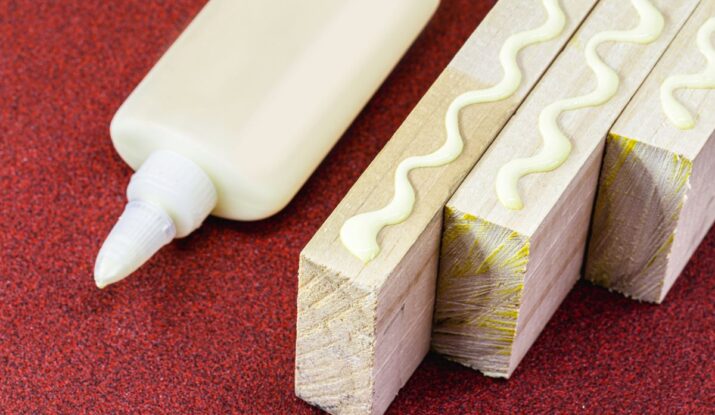
You pull open a kitchen drawer. A chunk of the front corner falls off.
Or you move a shelf. The bottom edge crumbles like dry cake.
That’s particle board for you.
I’ve been fixing this stuff for over 15 years. Homeowners call it “fake wood” or “pressed sawdust.” They’re not wrong. But here’s the good news. You can fix it. And you don’t need to be a pro. A right wood filler for particle board can save you time and money.
Quick Answer: The best wood filler for particle board is two-part epoxy putty. KwikWood or Mohawk both work. It hardens stronger than the original board. For tiny chips under a quarter inch, Minwax Wood Filler is fine. But for anything near moisture or weight? Use epoxy.
What Makes Particle Board So Hard to Fix?
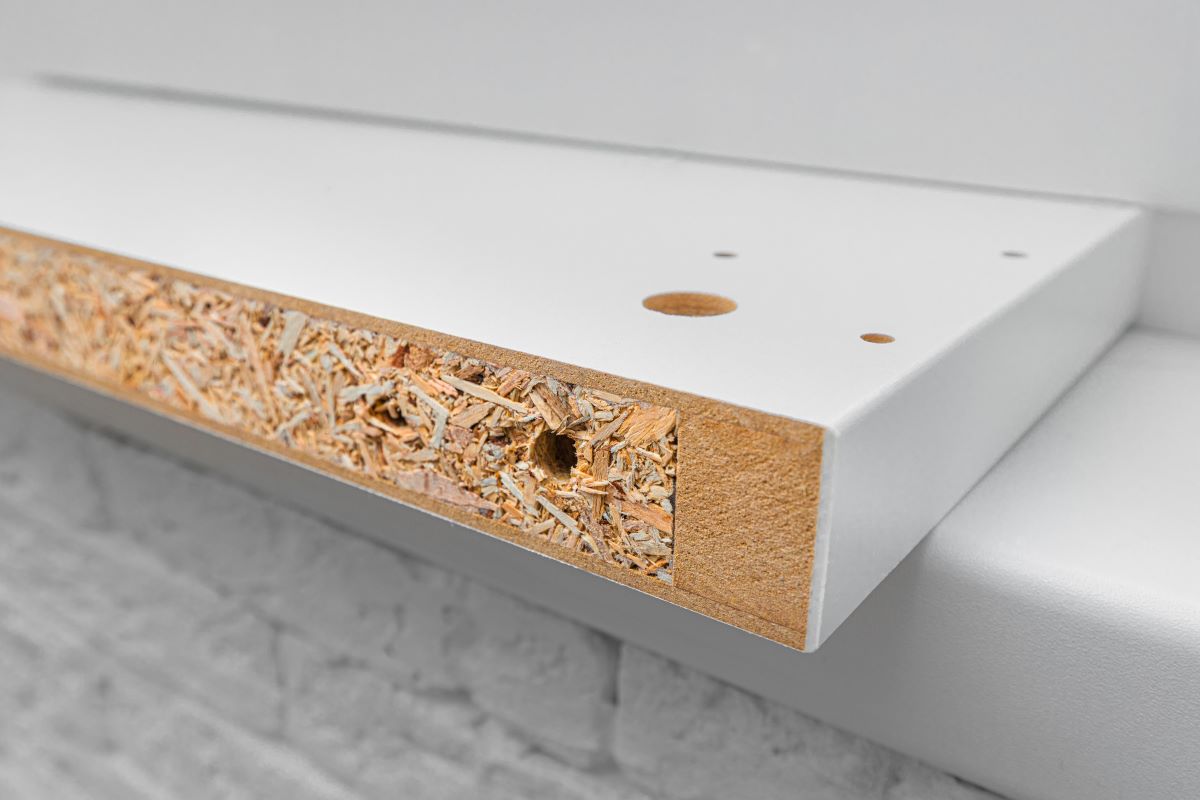
Particle board is different from solid wood. It’s made from wood chips, sawdust, and glue. Then it gets pressed into sheets.
That’s why it breaks the way it does.
Solid wood splits along the grain. Particle board crumbles. The edges are the weakest spot. And water? Water is the enemy.
Dr. Cabinet Advice: Never use regular spackle or drywall compound on particle board. It won’t bond. You’ll waste an afternoon and still have a broken cabinet.
Here’s what happens. Moisture gets in. The glue breaks down. The wood particles swell. Then they turn into mush. Once it crumbles, you can’t just paint over it.
But you can fill it. The trick is using the right filler for the job.
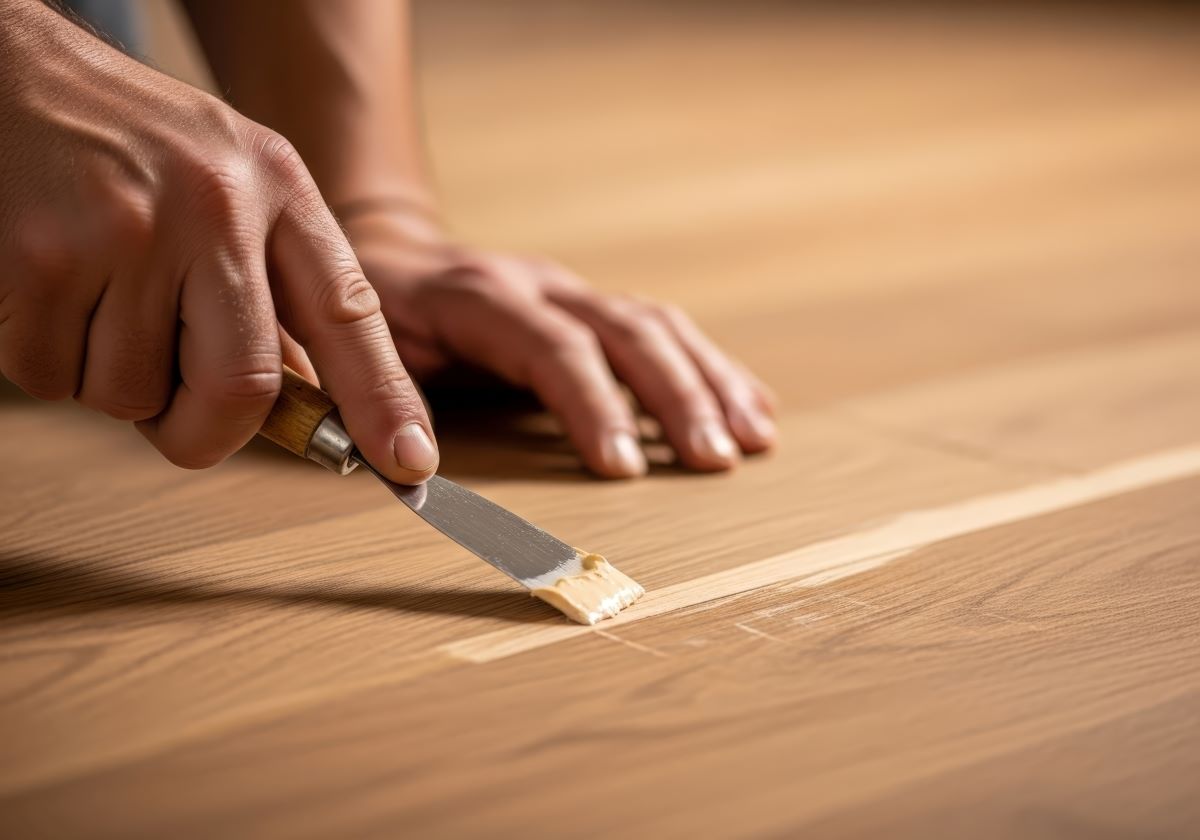
The 3 Types of Wood Filler for Particle Board
You might be wondering which wood filler to choose for your DIY project of fixing particle board. Not all fillers work the same. Some make the problem even worse. Here’s what you need to know before you fall for any suggestions.
| Different Types of Filler | Best For | Drying Time | Water Resistance | Skill Level |
| Water-based | Small chips, nail holes, surface scratches | 30 min – 2 hours | Low – not for wet areas | Beginner |
| Solvent-based | Gaps, cracks, edges that need strength | 15 – 45 minutes | Medium | Intermediate |
| Two-part epoxy | Broken corners, swollen edges, structural repairs | 20 – 30 min (set time) | High – waterproof | Intermediate |
Minwax Wood Filler
Water-based fillers like Minwax are easy to sand and paint. It spreads easily with a putty knife and accepts paint or stain well. But they shrink. And they don’t like moisture. Use them only for small, dry repairs.
Oil Based Wood Filler
Oil-based fillers don’t shrink. They bond harder and have a thick consistency. But they smell strong. Work near an open window.
Two-Part Epoxy
Two-part epoxy is the heavy lifter and gives structural integrity. You mix two sticks or a resin and hardener. It cures rock solid. You can drill into it. Sand it. Paint it. This is what I use on 80% of my particle board repair jobs.
How to Fix Chipped Particle Board (Step by Step)
Let’s fix that chipped cabinet corner. You’ll need:
- Epoxy putty stick (KwikWood or similar)
- Putty knife
- 120-grit and 220-grit sandpaper
- Denatured alcohol or acetone
- Clean cloth
Step 1 – Clean the damage. Wipe away dust and loose bits. Scrub the area with alcohol on a cloth. Let it dry.
Step 2 – Cut a piece of epoxy putty. You only need about a half-inch for small chips. Knead it in your fingers until the color is uniform. That takes about 30 seconds.
Step 3 – Press it in. Push the putty into the chip. Overfill it a little. You’ll sand the extra off later.
Step 4 – Shape it. Wet your finger and smooth the putty close to the final shape. Epoxy doesn’t stick to wet skin.
Step 5 – Wait. Let it cure for the time on the package. Usually 20-30 minutes.
Step 6 – Sand it. Start with 120-grit. Then 220-grit. Blend the repair into the surrounding surface.
Step 7 – Prime and paint. Particle board soaks up primer. Use one light coat first. Let it dry. Then a second coat. Then paint.
That’s the whole job. From crumbly chip to smooth surface in under an hour.
How to Fill Holes in Particle Board
Holes are easier than edge chips. But you still need to do it right.
Small holes from screws or nails? Use water-based wood filler. Push it in with a putty knife. Let it dry. Sand it flush.
Pro Tip: Fill deep holes in thin layers. Keep each layer less than 1/4 inch thick. Let each one dry fully. And then add the next. Thick filler takes forever to dry and can crack.
Bigger holes, like where a hinge ripped out? That needs epoxy. Clean the hole. Mix your putty. Pack it in tight. Overfill just a bit.
Here’s a trick pros use. Before the epoxy gets rock hard, stick a toothpick or a short dowel in the middle. Let it set. Pull the toothpick out. That leaves you a nice starter hole for the new screw.
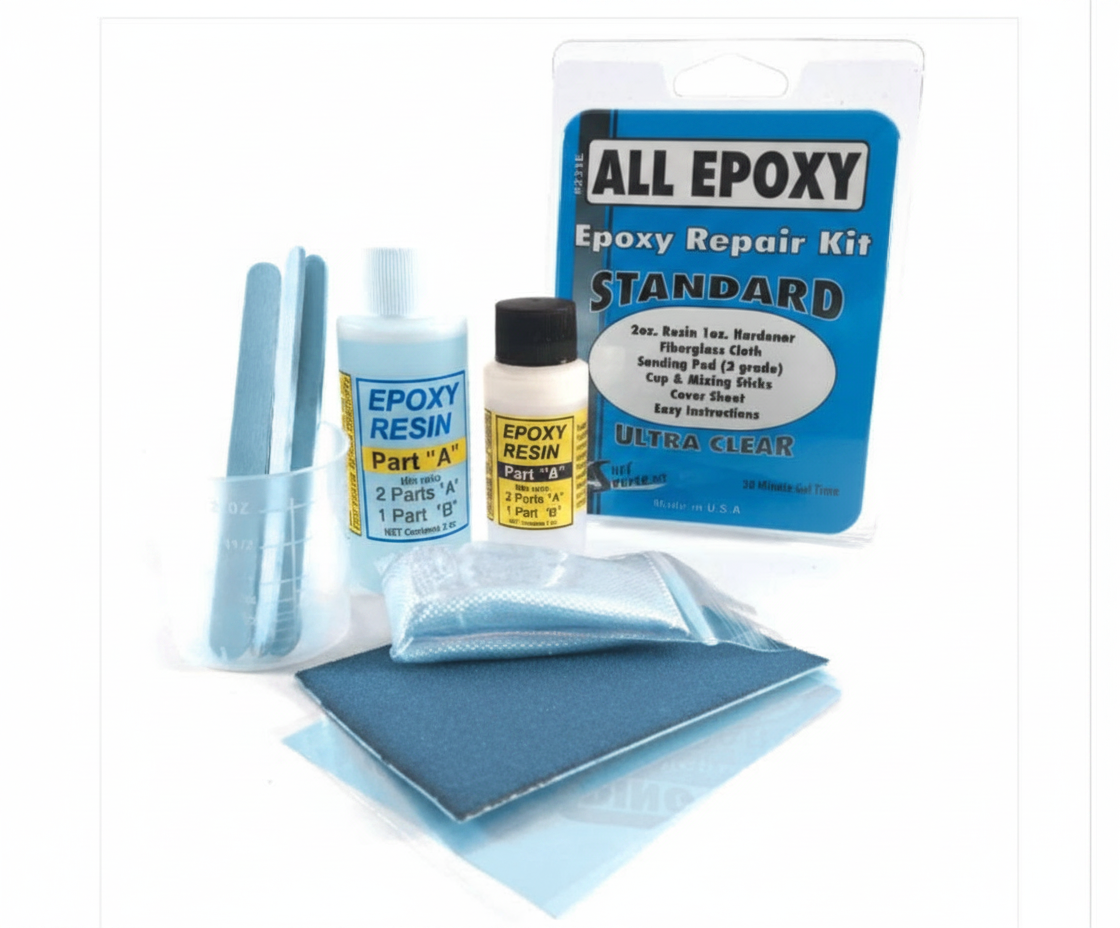
Can You Fix Cracked Particle Board Without Replacing It?
Yes. Most cracks are fixable.
But you have to catch them early.
A hairline crack? Use thin super glue. Let it wick into the crack. Then sand and fill the surface with solvent-based filler.
A crack that’s opened up? You need to stabilize it.
First, open the crack slightly with a putty knife. Clean out any loose dust. Mix two-part epoxy. Work it into the crack with a toothpick or small stick. Clamp the board if you can. Let it cure for an hour.
Good to Know: If a particle board has turned into wet mush, it can’t be repaired. Cut that section out. Replace it with new wood or epoxy paste.
Water Damage and Swollen Edges
This is the most common problem I see.
A dishwasher leaks. A pipe drips. The cabinet bottom edge swells up like a sponge.
Step 1 – Assess the damage. Push the swollen area with your thumb. Does it feel solid underneath? Or does it push in?
Step 2 – Cut away loose material. Use a utility knife to remove the swollen, crumbly part. Get down to solid board.
Step 3 – Dry the area. Point a fan at it for a few hours. You need zero moisture before you fill.
Step 4 – Build it back. Two-part epoxy is your only choice here. Mix it up. Build the missing edge back in layers. You can shape it with a putty knife or even a popsicle stick.
Step 5 – Sand and seal. Once hard, sand to match. Apply a coat of primer to seal the repair.
Water-damaged particle board never looks perfect. But you can make it functional and smooth.
Should You Replace or Repair?
Here’s how I decide on job sites.
| Damage Type | Repair | Replace |
| Small chip on corner | Yes – epoxy putty | No |
| Cracked edge | Yes – if solid | If crumbly |
| Screw hole stripped | Yes – fill and re-drill | No |
| Swollen bottom edge | Yes – if less than 2 inches | If more than half the board is soft |
| Large broken section | No – too weak | Yes |
| Entire cabinet side | No | Yes |
Honest answer? Sometimes repair isn’t worth your time. If the damage covers more than half the board, just replace the piece. Particle board is cheap. Your time isn’t.
The Sawdust and Glue Trick (Does It Work?)
You’ll see this online. Mix sawdust with wood glue to make your own filler.
Does it work? Sort of.
It’s great for matching color for repairs on flooring joints. For cabinets? Not my first choice.
Here’s why. Wood glue shrinks as it dries. The filler will sink below the surface. Then you have to fill it again. And the glue isn’t waterproof. One spill and your repair swells.
My advice? Use this trick only if you have nothing else. And only for tiny nail holes. For real repairs, buy the right product. A $6 tube of epoxy putty saves you hours of re-doing bad work.
What Tools are There in Particle Board Repair Kits?
You can buy kits with everything included.
Filler
Wood glue
Putty knife
Sandpaper
And instructions.
They’re fine for beginners. But you pay extra for the box.
The best wood filler for particle board is usually sold on its own. Buy a two-part epoxy stick. Get a separate putty knife. Use sandpaper you already have.
Dr. Cabinet Advice: Avoid cheap water-based fillers labeled “for wood.” Many contain water. Water makes particle board swell. You’ll fix one chip and create three more nearby. Read the label. Look for “low moisture” or “solvent-based.”
How to Prevent Future Damage
Once you fix it, keep it fixed.
Particle board needs protection. Here’s what works:
- Seal all edges with primer or edge banding
- Keep cabinets dry – fix leaks fast
- Don’t overload shelves beyond 30-40 pounds
- Add corner braces to weak joints
- Use shelf pins with metal sleeves, not plastic
That last one is key. Cheap plastic shelf pins punch right through particle board. Metal pins with a wide base spread the weight.
Edge banding is also a lifesaver and protects the repaired area from future damage. It’s a thin strip of veneer with heat-activated glue. Iron it onto raw particle board edges. It seals out moisture and looks like real woodworking.
If you’re dealing with a larger cabinet repair or water damage you can’t solve on your own, Dr. Cabinet offers free on-site estimates across the USA. We’ve seen every kind of particle board failure and know exactly how to fix it fast.
FAQ
Can you use wood filler on particle board?
Yes, but not all wood fillers work. Use water-based filler for small, dry chips and nail holes. Use two-part epoxy for edges, corners, and any damage near moisture. Never use filler that comes wet in a tub – the water can swell the board.
How to fill a hole in particleboard?
Clean the hole first. Remove loose dust. For smaller holes than 1/4 inch, use solvent-based filler. Insert it with a putty knife. Let it dry. Sand smooth. Use two-part epoxy putty for larger holes or stripped screw holes. Overfill slightly, then sand flush.
Can particle board be patched?
Yes. Small chips, cracks, and holes patch up fine. Two-part epoxy creates a bond stronger than the original board. The one exception is water-damaged board that has turned mushy. Cut that section out completely and rebuild it with epoxy or replace the board.
Is it safe to use wood filler on a cutting board?
No. Keep wood filler away from anything you eat off of. Those products have chemicals. They don’t belong near your food. Got a busted cutting board? Sand it down or toss it. Get a new one.
Conclusion
Fixing particle board comes down to one thing. Use the right filler. The best wood filler for particle board depends on the type of damage you’re repairing. Two-part epoxy for edges and big damage. Solvent-based for cracks and holes. Water-based only for tiny, dry spots. Clean the area first. Let everything dry fully. Sand smooth. Then prime and paint or varnish.
We’ve saved hundreds of cabinets this way at Dr. Cabinet. Honest repairs that hold up for years. Now go fix that chipped corner. You’ve got this.