
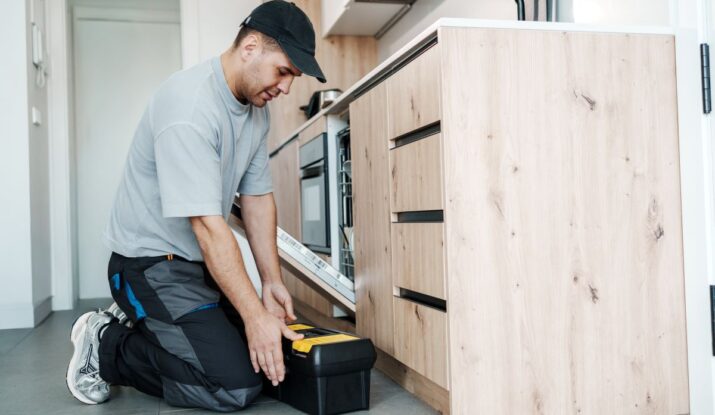
You see a cabinet door start to bubble next to the sink. Or your dining table has a chipped corner that gets worse each time someone hits it.
That’s how most wood veneer repairs begin.
Here’s the good part: you can fix most veneer problems without swapping out the whole piece. Peeling, bubbling, cracks, or even a missing chunk. All issues are fixable.
And the sooner you jump on it, the simpler the fix will be.
We have fixed veneer on kitchen cabinets, bath vanities, built-ins, tables, and furniture all over the USA. A lot of people think they have to replace the item.
They don’t.
Quick Answer:
Can damaged veneer be repaired?
Yes. For most wood veneer repair jobs, you only need wood glue, contact cement, wood filler, or a matching patch. Small jobs take under an hour. Bigger ones might need clamps left on for 6 to 24 hours before you sand, stain, and seal.
Why Does Wood Veneer Get Damaged?
Veneer is just a skinny sheet of real wood. It is glued onto plywood, particleboard, or some other firm base. It gives the look of solid wood but uses way less lumber. That keeps cabinets and furniture cheaper to buy.
Over time, veneer can become damaged because of:
- Water exposure
- Excess heat
- Sunlight
- Old glue failure
- Heavy impacts
- Changes in humidity
- Poor cleaning products
Most veneer problems appear in kitchens. Moisture, heat, and constant use affect the cabinets badly.
We have always found loose veneer around sinks and dishwashers. In these areas, steam and water have been present for years.
Good to Know:
Veneer stays safe in less humidity. It won’t shrink, swell, or peel off in humidity around 40% to 60%.
How Do You Know What Type of Veneer Damage You Have?
Before starting a repair, identify the problem.
Different damage requires different solutions.
The table below shows the most common veneer issues and the best repair method for each.
Common veneer problems and recommended repairs
| Damage Type | Typical Cause | Best Repair |
| Peeling veneer | Glue failure | Re-gluing |
| Loose veneer | Moisture or age | Wood glue |
| Chipped veneer | Impact damage | Wood filler or patch |
| Missing veneer | Severe wear | Veneer patch |
| Blistered veneer | Trapped moisture | Heat and glue |
| Cracked veneer | Dryness or age | Fill or replace |
| Large damaged area | Water damage | New veneer |
The key to a good repair is catching the problem early.
One loose corner is much easier to repair.
How to Fix Peeling Veneer
Homeowners face peeling veneer issues a lot. It usually can be easily fixed. The veneer that is still intact and hasn’t cracked, dose not need a replacement. You can often save money by fixing the existing veneer.
Step-by-Step: Re-gluing Peeling Veneer
- Gently lift the loose piece of veneer. Use a sharp utility knife to help if it’s stuck. Be careful not to bend it or crack it.
- Get the old glue out. Use a knife or a plastic scraper to clean the back of the loose veneer and the wood underneath . Old glue prevents new glue from sticking.
- Clean dust and debris from the surface.
- Apply the Glue. You can use wood glue for this. It gives you time to position the piece.
- Apply a thin layer to the exposed wood and the back of the peeling veneer. You can use a small brush to spread it. Contact cement is another choice. It bonds fast but doesn’t let you reposition the piece once it touches.
- Press the veneer back into place. Put pressure in the center. Squeeze out extra glue. Wipe excess glue with a damp cloth.
- Cover the repair with wax paper.
- Now, clamp it or put weight on it.
- Let it sit for at least 6-24 hours to dry.
If the surface is large, leave clamps overnight.
Pro tip: A lot of homeowners try to use a hammer or something hard to press the veneer down. Don’t. That can dent the thin wood. Use a flat block of wood, called a caul, between the clamp and the wax paper. This spreads the pressure evenly.
Titebond wood glue is very popular. It bonds really well.
What Is the Best Glue for Veneer Repair?
This question comes up on nearly every veneer project.
The answer depends on the type of repair.
Wood Glue vs Contact Cement
| Repair Type | Wood Glue | Contact Cement |
| Peeling edge | Excellent | Good |
| Loose veneer | Excellent | Good |
| Small repair | Excellent | Fair |
| Veneer patch | Good | Excellent |
| Large area replacement | Fair | Excellent |
| Permanent bond | Good | Excellent |
Wood glue remains the first choice for most veneer repair projects. Contact cement works best when installing a new veneer over a larger area.
Some professionals also use hide glue for antique furniture. It matches traditional construction methods.

How Do You Fix Blistered Wood Veneer?
A raised bubble under the surface is what we call a blister.
You can feel it on touching even before it becomes visible. These blisters are usually formed by moisture or any liquid that gets under the veneer surface. Over the time, the old adhesive stops sticking to the surface.
These bubbles can be repaired. Most often, replacing the veneer is not needed.
Quick Repair Method
- Warm the area gently with a heat gun.
- Press the bubble flat.
- Cut a small slit if necessary.
- Apply wood glue beneath the veneer.
- Clamp until fully dry.
Heat can reactivate old glue. It help the veneer settle back into place.
But be careful.
Using too much heat can harm the existing finish. It can cause the veneer to crack.
We’ve seen homeowners making this mistake and ending up with larger repairs. They had held a heat gun too close for too long.
Start slowly.
How to Repair Chipped Veneer
Chipped veneer surfaces on drawers and cabinet doors are repairable.
Different sizes of chips are repaired differently.
For Small Chips
You’ll usually need:
- Wood filler
- Furniture marker
- Fine-grit sandpaper
- Clear coat finish
To fix small chips, fill it with a wood filler. Allow it to dry. Then lightly sand it to smooth. Now blend the area with the grain around it using a furniture marker or matching stain. Apply a clear coat finish in the end.
For very small chips, a wax filler stick in a matching color with the veneer is far better than standard wood filler.
For Larger Chips
A veneer patch usually creates a more natural repair.
Trying to fill a large missing section with filler alone often leaves an obvious spot that stands out from the rest of the surface.
That’s where matching veneer becomes important.
A properly installed veneer patch follows the grain pattern. It blends much more naturally into the surrounding wood.
Important: Check the moisture source first. Look around the sink, dishwasher, or coffee machine areas. Fix it before repairing. Otherwise, the new repairs will fail for the same reason.
How to Repair Missing Veneer
The extremely damaged veneer falls off the surface. It starts to show the underneath area. And we say the veneer missing from the top. It is a little more challenging to fix it. But it can still be repaired.
The biggest mistake homeowners make is that they fill large missing sections with wood filler. Then they expect the repair to disappear.
It won’t.
This happens because wood filler has no grain pattern. Large repairs usually remain visible.
Step-by-Step Veneer Patch Repair
- Remove loose veneer around the damaged area.
- Square it with a straight edge and utility knife.
- Test-fit the patch.
- Apply wood glue or contact cement.
- Press the new piece into place.
- Clamp firmly or add weight.
- Wait for some time so the adhesive dries completely.
- Sand lightly and then apply stain.
Matching the grain direction matters. It is same as matching the color.
When we repair older cabinet doors, we often spend more time matching grain than installing the patch itself. That’s what makes the repair blend into the surface.
Dr. Cabinet Advice:
New veneer should be the similar piece like the original one. If the wood type is different from the new veneer, it will absorb stain differently which will not look good.
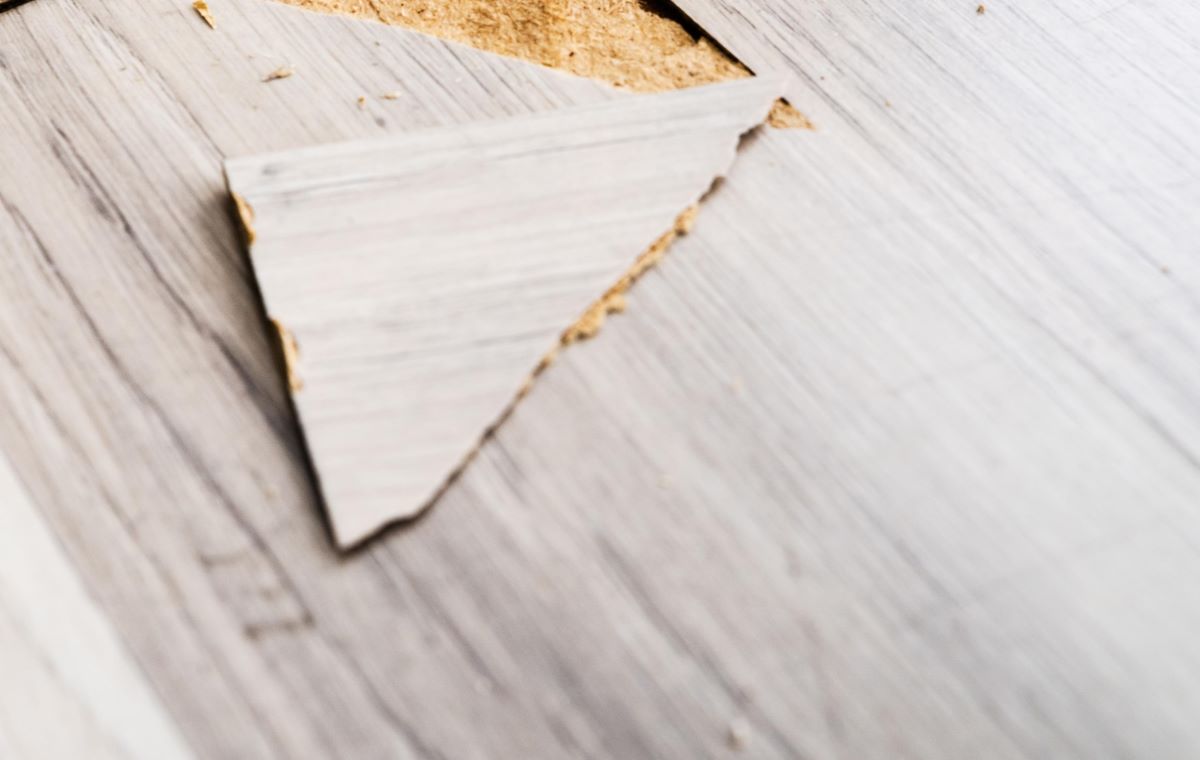
How Do You Fix Major Veneer Damage?
Sometimes the damage goes beyond a simple patch.
Water leaks ruin a large area of veneer. Neglecting it for a long time worsens it. This situation calls for replacing instead of repairing.
Signs You May Need New Veneer
- More than 30% of the surface is damaged
- Multiple veneer sections are loose
- Water damage has swollen the plywood underneath
- Cracks appear across large areas
- Previous repairs have failed repeatedly
A large tabletop is a good example.
t makes sense when half the tabletop veneer is peeling, replace it. Dozens of patching individual spots will look bad for sure.
Repair vs Replace
Situation Repair Replace Veneer
Small chip ✓
Loose edge ✓
Single bubble ✓
Missing corner ✓
Large water damage ✓
Multiple failed repairs ✓
Extensive cracking ✓
Honestly, the cheapest option rarely pays off here.
Trying to patch severe damage can take hours and still produce disappointing results.
How to Sand and Finish a Veneer Repair
Veneer repair should be blended into the existing finish. Otherwise, it will look odd.
Follow These Steps
- Lightly sand with 220-grit sandpaper.
- Remove all sanding dust.
- Apply matching stain.
- Allow the stain to dry fully.
- Apply a clear coat.
- Blend the edges into the surrounding finish.
Always start with light sanding. Veneer is thin. Aggressive sanding can cut through the veneer layer. It exposes the plywood below. That’s a common mistake in DIY method.
How to Prevent Veneer Damage in the Future?
A little maintenance keeps it in good condition.
Follow these simple habits:
- Dust with a dry microfiber cloth.
- Use coasters under hot drinks.
- Clean spills immediately.
- Avoid ammonia-based cleaners.
- Apply beeswax in every 6–12 months.
- keep indoor humidity level between 40% and 60%.
- Keep furniture away from sunlight.
These small steps help preserve both furniture and cabinets.
When to Call a Professional?
Some veneer repairs are perfect to DIY.
Others require specialized tools and experience.
Professional repair is often worth considering when:
- The furniture is antique.
- The veneer pattern is rare.
- The damaged area is large.
- Water damage has reached the substrate.
- The finish has lacquer or specialty coatings.
Many homeowners start a repair. Then realize the damage is deeper than expected.
That’s normal.
If you’re dealing with damaged cabinet veneer, large tabletop repairs, or extensive missing veneer sections, Dr. Cabinet provides cabinet repair and restoration services for homeowners throughout the USA.
For related cabinet repairs, see our cabinet restoration and cabinet door repair services.
FAQs
How to tell if it’s laminate or veneer?
Look at the wood. Veneer is real, so the grain wanders around—different curves, different gaps. Laminate is fake. Its pattern repeats, like wallpaper. If you sand a hidden spot, veneer gives off real wood dust. Laminate just shows plastic.
What to use to reattach veneer?
Wood glue works fine for loose edges. For bigger sheets, contact cement is better. After you glue veneer down, clamp it. Let it sit until the glue is hard.
How to fix a hole in wood veneer?
A tiny hole? Stuff it with wood filler or a wax stick that matches. A big hole needs a patch. Cut it from the same type of wood. Use a fine blade so the edges are clean. Fit it right into the missing area.
Can you get veneers repaired?
Yes. Most problems are fixable—peeling, chips, bubbles, gaps. Even beat-up old furniture can look decent again. Pros do it all the time. It usually costs less than tossing the piece.
Can water-damaged veneer be repaired?
That depends. Is the wood under it still hard? Then just glue veneer back down. No fuss. But if that bottom layer got mushy or puffed up from water, you’re out of luck with glue. You’ll have to peel off the old face and lay down a fresh sheet. More work. But that’s the only way.
How long does veneer repair last?
A good fix holds for years. Done right, it can last as long as the original wood.
Conclusion
Veneer repairs aren’t as hard as they look. Loose corners, bubbles, chips, small missing areas—you can handle those with glue, clamps, filler, or a patch.
The trick is to know what you’re dealing with before you start. Take your time. A rushed job falls apart fast. A careful one sticks around.
Fix things early. That way, water and wear don’t spread. Say you have an end table with a ding. Grab a fine blade and scrape off the old crumbly glue. Rub the spot smooth. Then glue veneer back down or patch the missing area. After that, you can match the repaired area to the rest by painting or you can refinish the whole top.
If your cabinets or old furniture have lots of damage, ask yourself: fix it or replace it? Often, a good repair brings back the look. And it saves you money. Big time.