
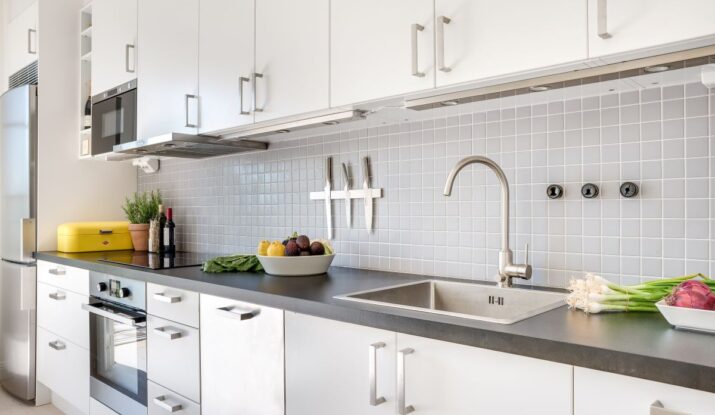
Your kitchen counters have seen better days. Maybe the edges near the sink are curling up. Could be scratches and stains all over from years of meal prep. Or maybe you just hate the color now. Whatever the reason, you’re here because you want to know how to replace laminate on countertops without spending a fortune.
A full tear-out costs thousands. Most folks don’t have that lying around. But here’s a cost effective method most people miss. You can swap out just the top layer. The laminate sheets. No sledgehammer needed. No dumpster. No plumber charging you to unhook the sink again.
Learning how to replace laminate on countertops is quite easy. Sometimes you glue the new stuff right over the old countertop upside. Other times you peel the old layer off first. Both ways work fine. It just depends what shape your counters are in right now.
We’ll show you the whole thing. What tools you actually need. Where people mess up. How to end up with something that looks clean and holds up for years.
Quick Answer Box
How to Replace Laminate on Countertops
- Check underneath first. If the wood is swollen or soft, stop. This won’t work.
- Peel off the old layer with a heat gun and putty knife. Or rough it up and go over it.
- Patch holes with Bondo. Sand it flat. Scuff everything so glue grabs.
- Cut new sheets a little big. Make the sink cutout now, before glue.
- Brush contact cement on both sides. Wait till it gets tacky. Lay dowels down so nothing sticks early.
- Pull dowels one by one. Press from the middle out. Roll hard with a J-roller.
- Trim edges with a router. File them smooth.
- Glue counter to cabinets. Caulk every gap you see.
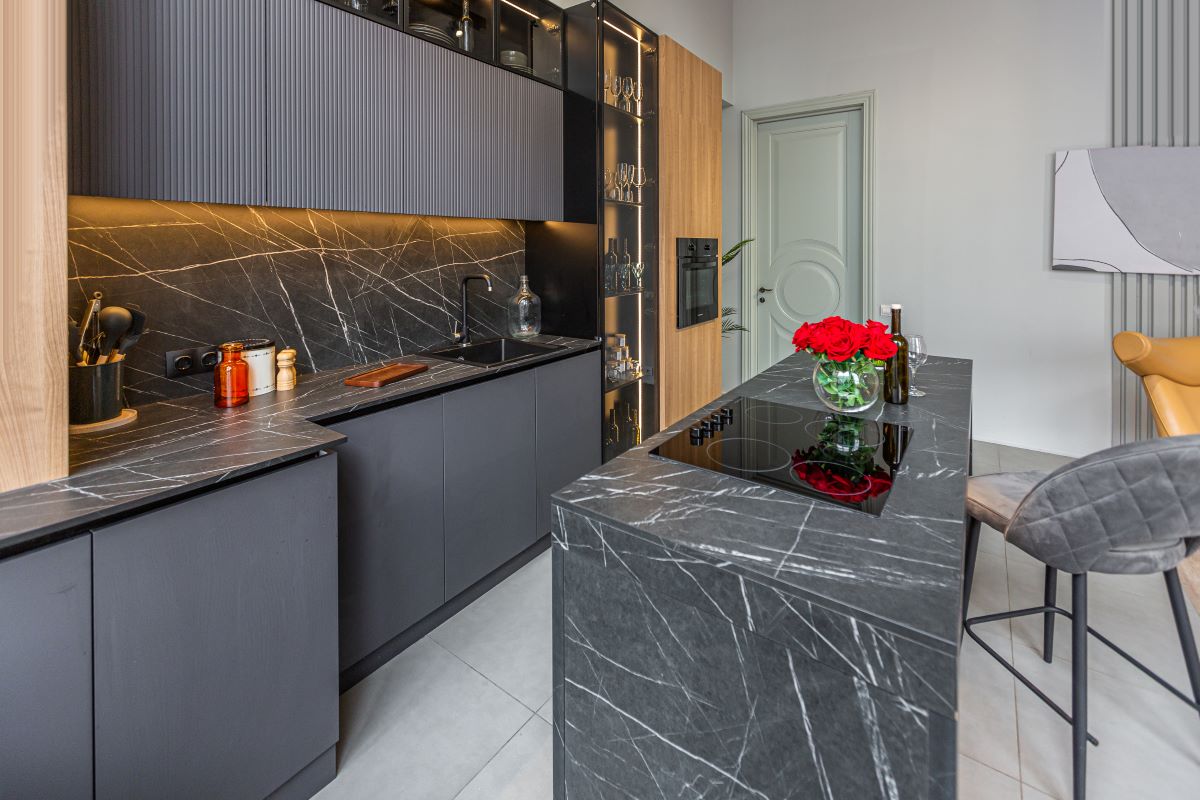
Is Your Existing Laminate Countertop a Good Candidate?
Don’t spend money yet. First figure out if your existing countertops can even handle this.
Signs You Can Proceed
Flat surface. No warping. The wood underneath laminate counters is dry, not crumbling. Edges look solid, not puffed up. Press around the sink. Press the front edge. If nothing moves, you’re probably fine.
Also look inside your cabinets from below. Water damage hides there. If the wood looks clean, good. A solid substrate means installing laminate countertops as an overlay will actually hold up.
When Full Replacement Is Necessary: New Laminate Countertop Installation
Some counters are done for. Spongy spots near the sink mean water got inside. That’s not fixable with a cover-up. Swollen substrate near the sink indicates replacement is necessary.
Bubbling across big patches tells you the glue failed underneath. Visible cracks affect hygiene and appearance of laminate. They let gunk and moisture in. Peeling edges suggest laminate countertops need replacement over large sections. Old laminate patterns may prompt homeowners to replace countertops completely anyway.
If the base is bad, don’t fight it. At that point, consider a new countertop installation. Laminate, natural stone, whatever fits your budget.
Cost Breakdown: DIY vs. Professional
Laminate countertops are one of the most affordable options out there. That’s the whole appeal.
DIY Material Costs
| What You Buy | Rough Price |
| Standard laminate sheets | $60 to $150 per sheet |
| Fancier patterns | $120 to $300 per sheet |
| Contact cement, gallon | $20 to $40 |
| Bondo | $15 to $25 |
| Caulk and adhesive | $15 to $30 |
| Brushes, rollers, small stuff | $10 to $20 |
| Total | $120 to $565 |
Costs vary based on material thickness and layout complexity. A simple rectangle needs maybe one or two sheets. Lots of corners means more waste and more cuts. Replacing multiple corners increases overall costs significantly. Premium laminate patterns raise the price compared to standard options.
DIY vs. Hiring It Out
| You Do It | Someone Else Does It | |
| Materials | $120 to $565 | In their bid |
| Labor | Your weekend | $300 to $800 |
| Final bill | $120 to $565 | $500 to $1,500+ |
| Timeline | Two days | A day or two |
Laminate countertops deliver excellent value compared to granite. Stone runs two grand easy. Quartz and marble cost even more. New laminate countertops give you a fresh surface for way less money.
Tools and Materials Checklist
Get it all before you start. Nothing worse than running to the store with glue on your hands.
Essential Tools
Heat gun. This loosens the old glue. A hair dryer might work on a tiny spot but not a whole counter.
Putty knife. Slides under the old laminate once the heat does its thing.
Utility knife. For scoring sheets before you snap them.
Fine-tooth handsaw. A fine-tooth handsaw is recommended for cutting laminate without chipping the edges.
Jigsaw. Use a jigsaw to cut sink holes.
Dremel Multi-Max. A Dremel Multi-Max is useful for cutting laminate in corners and tight areas where bigger tools won’t fit.
Flush-trim router bit. The most important tool to trim excess laminate flush with the countertop edge.
Laminate file. Smooths out sharp cut edges left by the router.
J-Roller. A J-Roller is used to apply even pressure to ensure a strong bond across the whole surface.
Rotary sander with 150-grit discs. Use for smoothing Bondo after it cures.
Thin wooden dowels or scrap wood. Used as spacers to prevent premature adhesion when you’re positioning the sheet.
Masking tape and cotton cloth. For marking cuts and wiping surfaces clean.
Safety Equipment
For the strong fumes coming off from contact cement, a respirator or dust mask is a good idea. Safety glasses to protect eyes from wood chips and laminate shards. They fly around during cuts.
Materials to Install Laminate Kitchen Countertops
New laminate sheets. Sized to fit countertop dimensions, but buy them a little bigger. Contact cement is used to bond laminate to substrates. Bondo fills cracks and broken areas in laminate. Construction adhesive for the countertop to attach them to cabinets. Caulk to seal joints and to prevent moisture damage. Mild soap and warm water for cleanup.
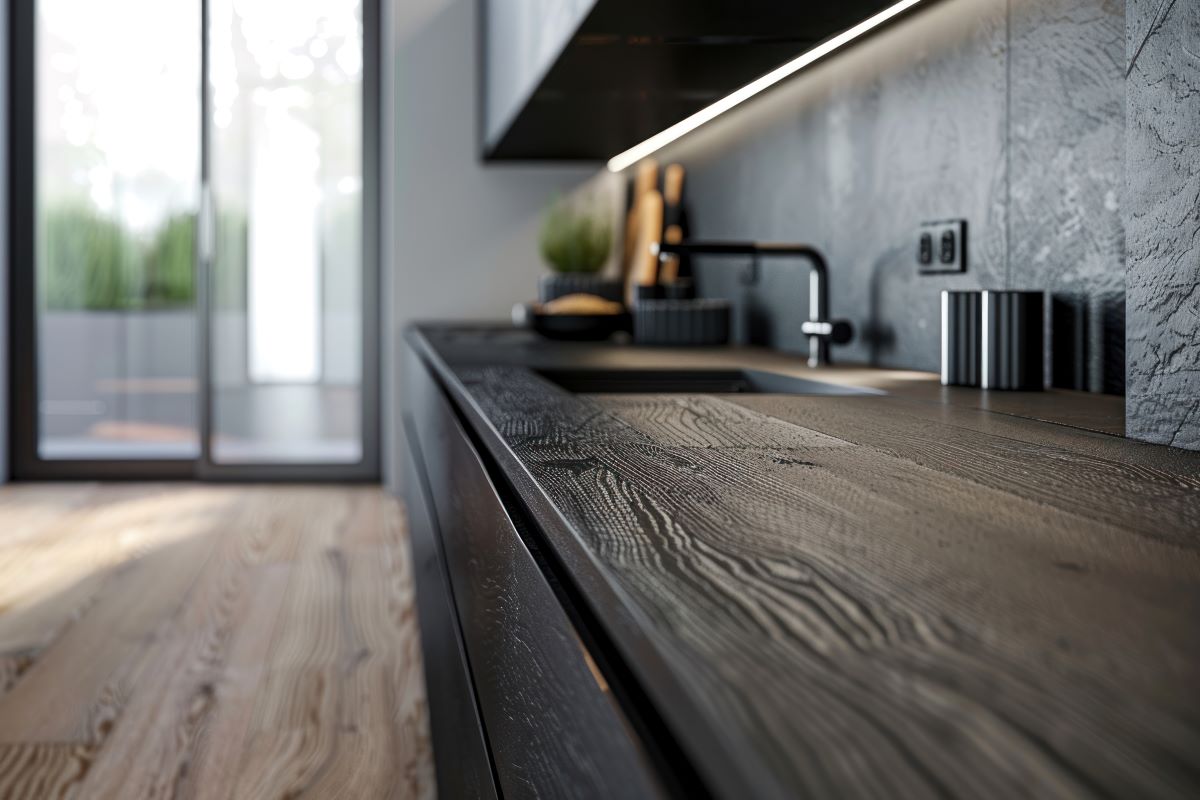
Step 1: Remove the Old Laminate
Removing old laminate countertops takes patience. The old stuff is stuck hard with contact cement. You have to break the bond without wrecking what’s underneath.
Heat and Lift
Set the heat gun to medium-high. Move it slow across the surface. When the glue gets soft, slide the putty knife under. Steady pressure. Don’t twist or crank on it. That gouges the particleboard.
Work in small chunks. Maybe a foot at a time. The heat loosens things up, you lift, move on. If the old laminate is still stuck solid except a few peeling spots, leave it alone. Scratch and scuff the old laminate for better adhesive grip and go right over the top.
Handle Stubborn Adhesive
Don’t scrape down to bare wood. Sand the leftover glue smooth. Use your belt sander and 150-grit discs for it. Level up any lumps and bumps. Clean up with a damp cotton cloth and a mild soap. Let it dry fully.
Step 2: Repair and Prepare the Surface
Now fix what’s damaged and rough up the rest so everything bonds right.
Filling Imperfections and New Sink Hole
Bondo can fill cracks and broken areas in laminate substrate. Same car filler from the auto shop. Mix it. Smear it into holes and chipped spots. Put a little extra on since it shrinks some as it sets.
Pay extra attention near the sink area and front edge. That’s where damage piles up over years of use. Once it cures, sand until everything feels flat. Use a rotary sander with 150-grit discs for smoothing Bondo. Run your hand across. Should feel like one smooth surface.
Create Adhesive Grip
The whole surface should look dull and scratched up. Scrape out the old laminate well with 80-grit sandpaper for a better grip. Contact cement sits on that rough texture really well.
Vacuum off all the dust. Wipe with a damp cloth. Let it dry completely. Anything left on the surface weakens the bond.
Step 3: Measure, Cut, and Dry-Fit
Cutting laminate makes people nervous. One wrong move and you’re buying another sheet. Slow down here.
Sizing
Laminate sheets are sized to fit countertop dimensions from the factory, but your layout is unique. Add an extra inch all around. You can trim the excess later with your router. You can’t add material back once it’s cut short.
An inch to an inch and a half past the cabinet front is standard according to the desired overhang. Mark lines with masking tape and pencil so you know where to cut.
Cutting Without Chipping
Use a fine-tooth handsaw to avoid chipping while cutting the laminate without. Keep the pretty side facing up while you cut. Chipping happens on the bottom where nobody sees it.
Sink cutouts need a jigsaw. Cut the sink hole before prepping the countertop. This way you can test-fit the sheet without messing up your prepared work surface. A Dremel Multi-Max helps in corners and tight spots.
Put masking tape on your cut line. It reduces chipping. Old trick but it works every time.
Dry-Fit
Lay sheets down on the counter. Check if all the edges are perfectly straight. Check the sink hole alignment. Check where the sheet meets the wall or tile backsplash. Everything should sit flat at right angles with no rocking.
Fix any problems now. After glue goes on, there’s no sliding anything around. The bond is instant.
Step 4: Apply Contact Cement and Bond
This step makes or breaks the whole project. Do it right and your counters last. Rush it and you’ll see bubbles in six months.
Safety First
Contact cement fumes are rough. A respirator or dust mask is recommended due to strong fumes from contact cement. Open every window. Get a fan moving. If you have a garage, do this part there. Safety glasses should be worn for protection from wood chips and laminate shards when trimming later.
Application
Brush contact cement on both sides. The substrate and the back of the laminate sheet. Use a disposable brush or roller. Get an even coat. No bare spots. No puddles either.
Now wait. Usually 15 or 20 minutes depending on humidity. Touch it with your knuckle. Should feel tacky, not wet. If it dried hard and isn’t sticky anymore, put another coat on.
The Dowel Method
A thin wooden dowel or scrap wood is used as a spacer to prevent premature adhesion. Lay sticks every 8 to 10 inches across the counter. Set the laminate sheet on top. Now it floats above the glue without touching.
Pull one dowel from the middle. Press down. Work your way outward from there. That pushes air out as you go. Contact cement bonds instantly, so the dowel method gives you control over positioning.
Roll for Bond Strength
A J-Roller is used to apply even pressure to ensure a strong bond. Roll hard. Every direction. Front to back, side to side, diagonal. Hit edges and seams extra. Spend several minutes on this. Skipping the roll is why people get bubbles and peeling later.
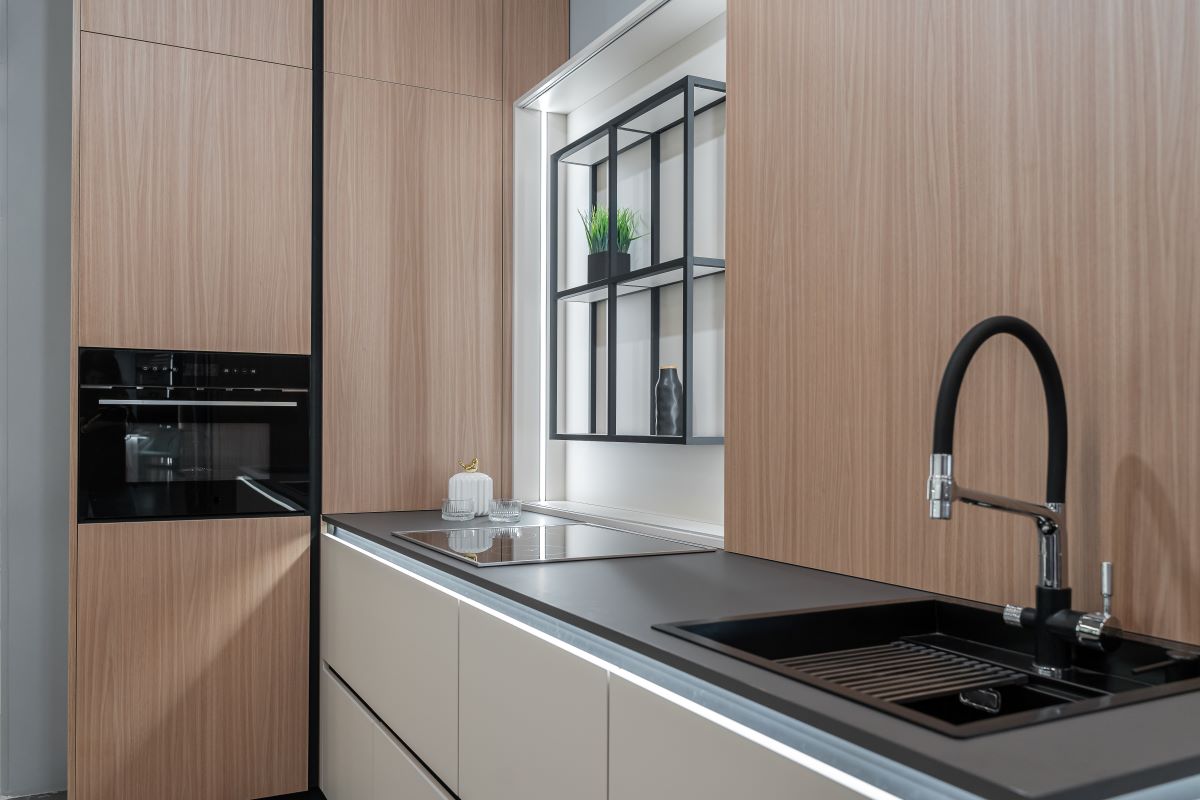
Step 5: Trim, File, and Finish
You’ve got overhang everywhere. Time to make it look clean.
Router Trimming
A flush-trim router bit is the most important tool to trim excess laminate flush with the countertop edge. The bearing rides along the edge while the blades cut. Move counterclockwise around the whole counter. Steady passes. Don’t stop in one spot or you’ll burn the edge.
Smoothing
A laminate file is used to smooth out sharp cut edges left by the router. Tilt it a little and pull in one direction. The sharp edge comes right off.
The backsplash may have tight spots. The router couldn’t reach there. A Dremel Multi-Max is useful for cutting laminate precisely on such areas. It fits where bigger tools can’t.
Sink Opening
Use a jigsaw to cut sink holes. Drill a starter hole inside the sink outline. Follow your line carefully. Support the cutout piece from underneath. So it doesn’t drop and tear the laminate edge on the way out.
Step 6: Install and Seal
Almost done. Now lock everything in place and keep water out.
Secure to Cabinets
Apply construction adhesive to secure the countertop to cabinets. Run a bead along the cabinet top edges. Set the counter down. Press it in. Let it cure a full day before you use it hard.
Seal Against Moisture
Seal joints with caulk. It prevents moisture damage. Run silicone caulk along the back edge where counter meets wall. Also around the whole sink area. Then along miter joints where two pieces of laminate come together. Water finds any gap you leave, so be thorough.
Smooth the bead with a wet finger. Wipe extra with a damp cotton cloth.
Care and Maintenance for Laminate Countertops
Clean it daily. A damp cloth and a little mild detergent are enough. Wipe up anything wet right away. That keeps moisture from sneaking into seams or edges.
Laminate isn’t heat resistant. It can handle some warmth, but not much. A pan straight from the burner will leave a mark. So always use trivets or hot pads underneath.
Cutting boards aren’t optional. One slip with a knife and that scratch stays forever. Also, skip the harsh cleaners. They dull the surface over time. Nothing abrasive. No bleach. Mild soap does the job just fine.
Quick Laminate Countertops Repairs: When Full Replacement Isn’t Needed
Small problems don’t need a whole redo. Some things you can fix in minutes.
Peeling laminate can be glued back with contact cement. Dab it in with a toothpick. Wait till it gets tacky. Press it down. Put something heavy on it for a few hours.
Light scratches can be repaired with paste wax-based furniture polish. Buff it into the scratch gently. Most surface marks disappear.
Deep scratches require hard wax putty sticks for repair. You can find these in colors that match laminate. Rub the stick into the scratch. Buff off the extra.
But know when to stop patching. Bubbling indicates it’s time to replace laminate countertops. Old laminate patterns may prompt homeowners to replace countertops just because they want a new style. Sometimes a fresh look is reason enough.
Frequently Asked Questions
Can I install new laminate directly over old laminate?
Yes, if the old stuff is stuck solid. No bubbles or soft spots. Rough it up with sandpaper first so the new adhesive grabs.
How long does laminate overlay last?
Ten to fifteen years, sometimes more. Depends how well you prepped and how you treat it day to day.
What thickness laminate sheet should I use?
Standard sheets run about 1/16 inch. That’s plenty for most kitchen counters.
Can I replace just a section?
You can, but seams show. Match the pattern best you can. Seal miter joints tight against moisture.
What’s the difference between contact cement and construction adhesive?
Contact cement bonds laminate to substrate instantly on contact. Construction adhesive stays workable longer. Use that between counter and cabinets.
How do I handle an old sink when replacing laminate?
Pull the old sink out first. After the new laminate is on and sealed, put the old sink back or drop in a new sink using the template that comes with it.
Conclusion
Now you know how to replace laminate on countertops. It’s a weekend job. A couple hundred bucks in materials. Compare that to the cost of new countertops and the savings are huge.
What separates a good result from a bad one is pretty simple. Prep the surface right. Take your time with the contact cement. Trim slow and careful. Seal every gap against water. Rush any of that and it shows. Do it right and nobody will believe you did it yourself.