
Ever yank a drawer so hard the whole cabinet shakes? We have. Plenty of times.
You’re in a rush. You need that spatula. But the drawer says no. It sticks. It squeals. It stops halfway and refuses to move.
We get calls about this every week. People think their kitchen needs a total redo. Most times, that’s not even close.
Here’s the honest truth about drawer slides. They’re not complicated. They get dirty. They get loose. Sometimes they bend. But fixing them? Most repairs take about ten minutes. Maybe fifteen if you’re slow.
We’ve done this thousands of times. On old farmhouses in the Midwest. On brand-new condos in Florida. On rental units that haven’t seen a screwdriver in twenty years.
This guide shows you exactly how to repair drawer slides. We cover cleaning, greasing, adjusting, and replacing. Read this once and you’ll never call a handyman for a sticky drawer again.
Quick Answer: How to Repair Drawer Slides?
Pull the drawer out and look for the problems. 7 out of 10 problems are just dirt and neglect. Clean everything with a rag. Tighten the loose screws. Apply silicone lubricant on the moving parts. Slide it back in. If needed, give the drawer a small wiggle. Still sticking? Check if the slides are straight. Adjust them. Replace the bent or broken ones.
What You’ll Need to Repair Drawer Slides
Grab these tools. Most are already sitting in your junk drawer.
|
Tool |
What It’s For |
|
Screwdriver (Phillips and flathead) |
Tightening and loosening screws |
|
Tape measure |
Checking lengths and gaps |
|
Level |
Making sure things sit straight |
|
Old rag or cloth |
Wiping off dirt and grease |
|
Silicone spray lubricant |
Slicking up metal parts |
|
Fine-grit sandpaper |
Smoothing rough wood tracks |
|
Vacuum with skinny nozzle |
Sucking dust out of tracks |
|
Pliers |
Bending metal back into shape |
|
Toothpicks or matchsticks |
Fixing stripped screw holes |
Pro Tip: Keep the WD-40 in the garage. It collects dust and makes things worse. Use silicone spray. It stays clean.
Step 1: Figure Out What’s Wrong
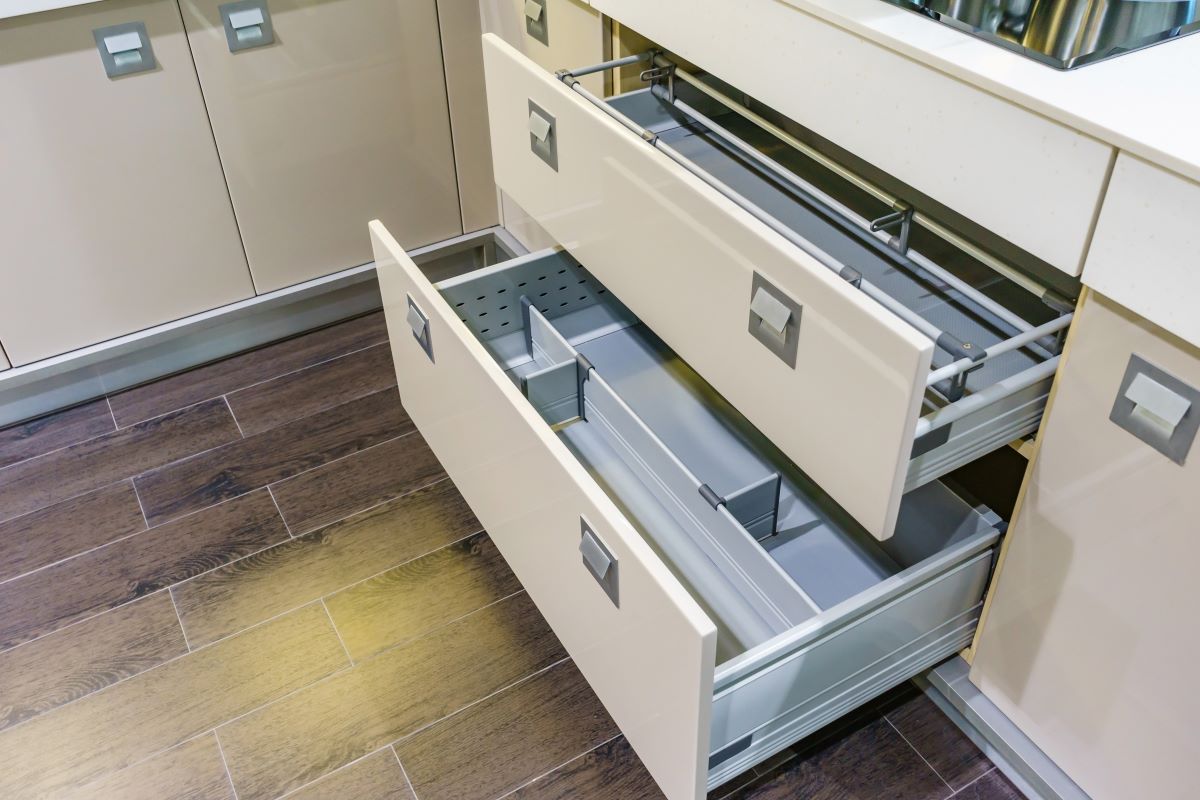
Find out the problem.
Common things we see:
- Drawer sticks or binds – Won’t slide smooth. Gets stuck halfway.
- Drawer squeaks – Makes noise every time it moves.
- Drawer sags – Front hangs lower than the back.
- Drawer sits crooked – Doesn’t line up with the cabinet opening.
- Drawer won’t pull out fully – Stops short of where it used to.
Good to Know: About 7 out of 10 drawer problems are just dirt and lack of care. Clean and lube twice a year and most issues never happen.
Step 2: Get the Drawer Out
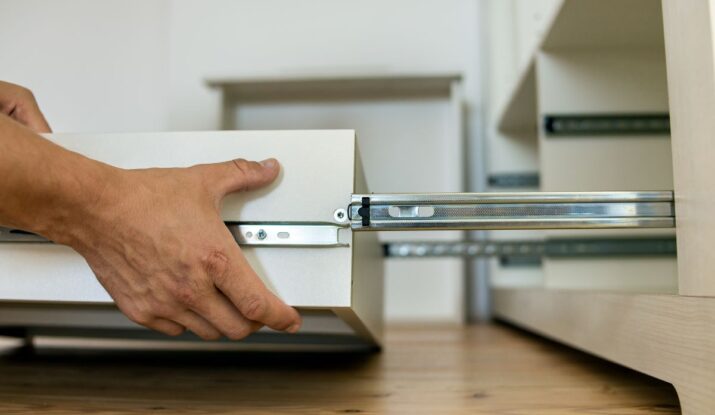
Pull the drawer until it stops. Look for little release levers or tabs on the slide hardware.
Gently push those tabs while pulling the drawer forward. It should come right out.
Sometimes a drawer gets really stuck. Here’s a trick. Take a thin piece of metal. Like a coat hanger and slide it into the gap. Run it along the track to clear whatever’s blocking it.
Once the drawer is free, set it on a table. Empty everything out. Perfect time to toss those old receipts and dead pens.
Step 3: Clean Everything
Dust and dirt are enemy number one.
Wipe down all the slides. Both the ones on the cabinet and the ones on the drawer. Use a dry rag. Pay attention to the grooves. It’s where gunk collects.
Use a vacuum with a narrow attachment for heavy dust buildups.
Look at any bent or broken parts. Also check plastic rollers or clips for damage. Small bends can be straightened with pliers. Serious damage means replacement.
Dr. Cabinet Advice: Old kitchens are the worst. We find layers of grease and dust packed into slides that haven’t been cleaned in decades. A good wipe-down fixes about half our service calls. Don’t rush this step.
Step 4: Lubricate the Old Drawer Slides
Clean slides need lubrication.
Spray a little silicone lubricant on all the moving bits. Work the slides back and forth a few times to spread it around. They should move smoothly.
Wipe off any extra with a rag.
What about wood drawer slides? Wood is different. Rub a dry soap or a beeswax candle along the contact points. It reduces friction without a sticky mess.
Common mistake: Using too much lube. A little is plenty. Too much just attracts dirt.
Step 5: Tighten Loose Screws
Wobbly drawers almost always have loose screws.
Check every screw on the cabinet slides and the drawer slides. Tighten anything that moves.
What if a screw just spins and spins?
Stripped hole. Here’s our fix:
- Pull the screw out
- Stick a wooden toothpick or matchstick into the hole
- Break it off flush with the surface
- Put the screw back in
A drop of wood glue can make the repair even stronger. The screw bites into the wood and holds tight. Works every single time.
Step 6: Adjust Misaligned Slides
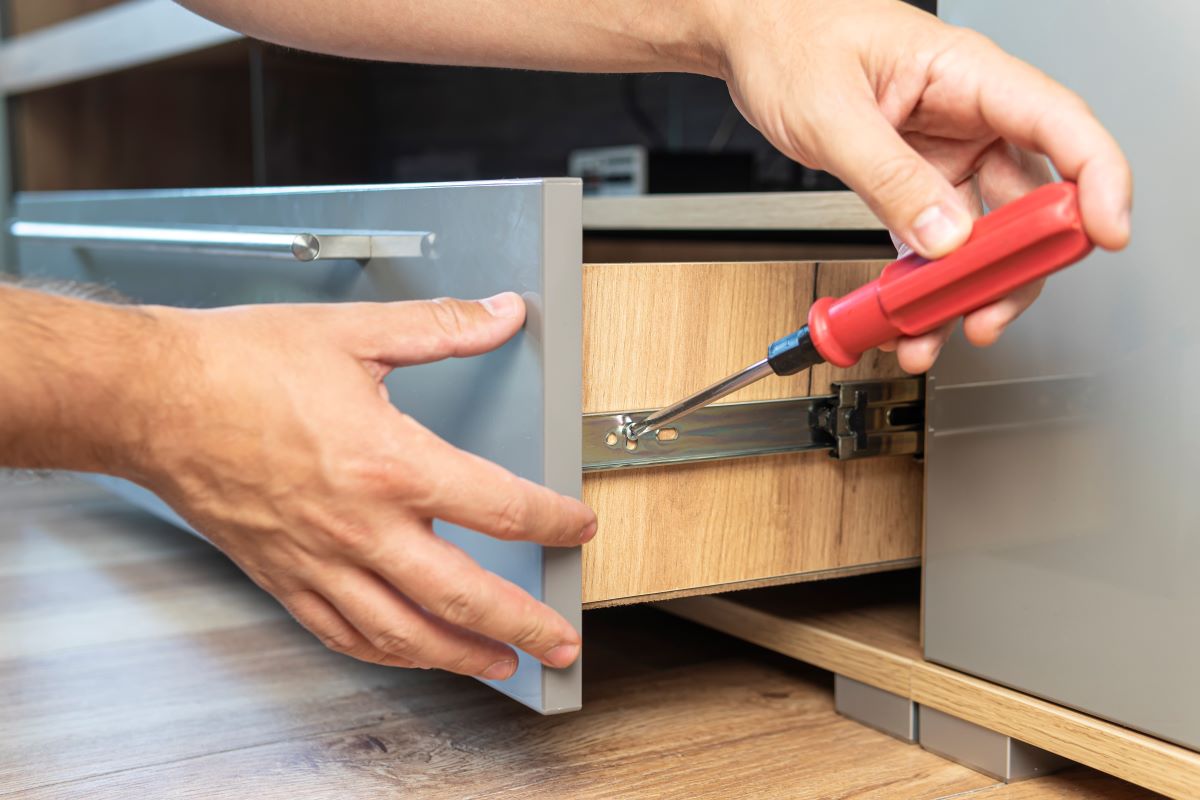
Crooked drawer? Rubs against the cabinet? Adjust the existing slides.
Here’s how:
- Take the drawer out
- Loosen the screws holding the slides to the cabinet (don’t remove them)
- Move the slides slightly where they need to go:
- Drawer sits low on one side? Raise that side’s slide
- Sits too high? Lower it
- Rubs the top? Lower both slides
- Tighten the screws and put the drawer back
- Test and adjust again if needed
Check alignment before tightening everything completely.
Pro Tip: Use a level. Eyeballing it works sometimes. The level works every time to get it aligned right.
Step 7: Know When to Give Up and Replace
Some slides are beyond saving. Replace them when:
- The slide is bent or broken badly
- Rollers are worn completely flat or the wheels are damaged.
- Rust has eaten through the metal
- The slide won’t pull out all the way
- You’ve tried everything and nothing helps
In these cases, replacement drawer slides are often the best solution.
Good news: Replacing slides is easy. New ones cost $25–$50 per drawer. The job takes about half an hour.
How to Replace Drawer Slides
Replacement isn’t hard. Follow these steps.
Step 1: Measure the Old Slides
Take measurements of the old slide carefully. Start at the back of the drawer box. Measure to the front edge. Don’t include the drawer face. Also confirm the drawer width. Make sure there’s enough space for the new slides.
New slides must match the length and type. Measure the drawer box too in case you need to go longer.
Step 2: Remove the Old Metal Slides
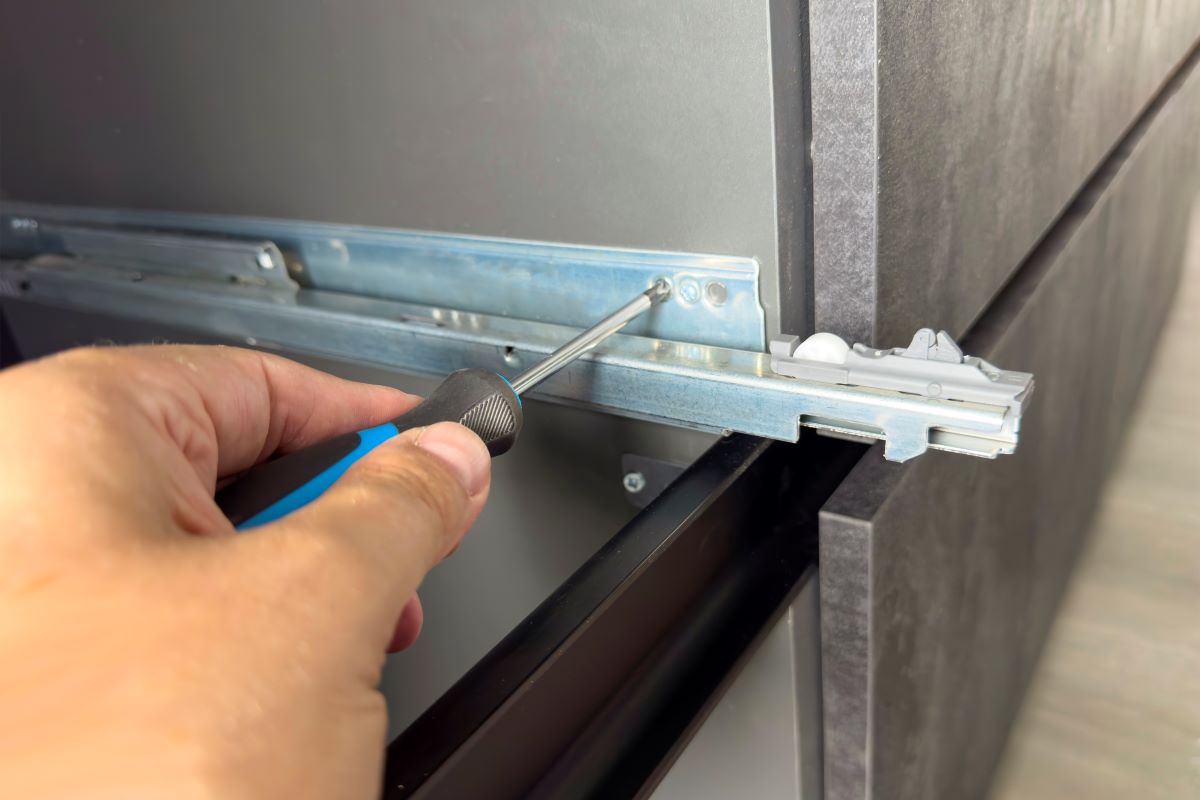
Unscrew the front and rear screws that are holding the slides to the cabinet. Also move the drawer-side halves.
Step 3: Put in the New Slides
Separate the new slide halves by sliding them apart.
Mark the height for the new cabinet slides on both sides.
Mount the slide hardware carefully before tightening the screws.
Use a level to draw a straight line at that height. Pre-drill holes and screw them in.
Attach the drawer halves to the drawer box. Slide it back in and test.
Types of Drawer Slides
Knowing what you have helps pick the right fix.
|
Slide Type |
What It Is |
Where It Lives |
|
Side-mount |
Mounts on the drawer side. Most common. Full extension. |
Most kitchen cabinets |
|
Center-mount |
One slide under the drawer center. Limited extension. |
Older furniture, light drawers |
|
Under-mount |
Under the drawer. Clean look. Harder to install. |
High-end cabinets, soft-close |
|
Bottom-mount |
Bottom of drawer on a track. Two configurations. |
Many standard cabinets |
Preventive Maintenance
Keep slides working smooth with regular care:
- Clean slides at least twice a year
- Lubricate after cleaning
- Don’t overload drawers
- Check screws every few months
- Keep slides dry to prevent rust
Good to Know: Clean and lube twice a year. It prevents about 7 out of 10 drawer problems.
FAQ on How to Repair Drawer Slides
How to get a sliding drawer back on track?
Pull the drawer all the way out. Find the release levers or tabs. Push them while lifting the drawer back onto the tracks. Slide it closed and test. If it isn’t working still, the slides might be crooked or damaged.
How to install drawer slides with ball bearings?
Separate the slide halves. Mount the cabinet half using a level to keep it straight. Pre-drill holes and screw it in. Attach the drawer half to the drawer box. Slide the drawer in making sure both sides catch. Test and adjust.
How to fix dresser drawer slides with ball bearings?
Remove the drawer. Check the bearings. Clean the tracks. Apply silicone lubricant. Work the slides back and forth. If bearings are damaged, replace the whole slide.
How to fix a drawer that falls off the track?
Misaligned slides or loose screws? Check all mounting screws. Tighten any loose ones. If the drawer still falls, adjust slide position using Step 6. Stripped holes? Use the toothpick trick.
How to fix a drawer that won’t close all the way?
Something’s blocking it. Or the drawer is crooked. Remove the drawer and check for debris. Clean thoroughly. Make sure the slides are parallel and level. If one side is higher, adjust it. Check that nothing inside hits the back.
When to Call a Professional
DIY can work in one drawer issue. But sometimes you need help.
Call Dr. Cabinet if:
- Several drawers have the same issue
- The cabinet frame itself is damaged
- You want soft-close slides throughout your kitchen
- You’d rather just have someone else deal with it
If sticky drawers are driving you nuts, Dr. Cabinet gives free on-site estimates. We serve homeowners all across the USA. Contact us today to set up a visit.
Final Thoughts
Drawer slides aren’t rocket science. Most problems are just dirt, no grease, or loose screws.
Remember these basics for how to repair drawer slides:
- Clean slides twice a year
- Use silicone lubricant
- Tighten loose screws
- Fix stripped holes with toothpicks
- Replace slides that are broken beyond repair
Our take? Start with cleaning and greasing. You’ll be shocked how often that’s all it needs.
And if you get stuck? That’s why we exist. Dr. Cabinet has fixed thousands of cabinets for homeowners across the USA. We know the work. We’ve seen the problems. And we fix them right.