
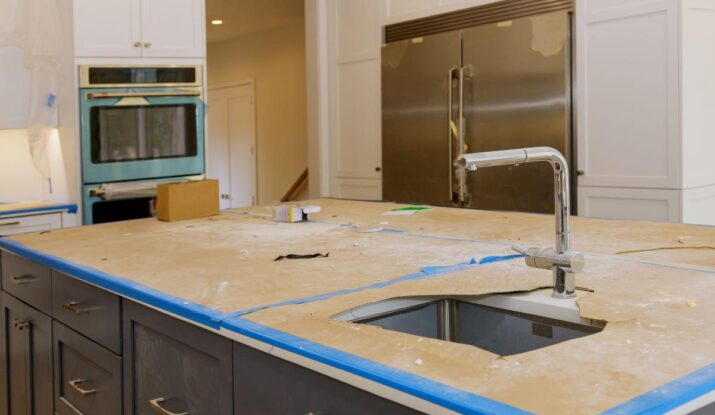
You open a kitchen cabinet one morning and notice the door doesn’t close right anymore. Maybe the bottom edge feels swollen. Maybe there’s a musty smell under the sink that wasn’t there before. That’s how cabinet damage usually starts. Small signs homeowners ignore until the repair becomes expensive.
The good news is, damaged cabinets don’t always need a full replacement. In plenty of kitchens, a professional cabinet repair service or a skilled furniture medic can restore the appearance, strength, and function of the cabinets for way less than a full remodel. The key is catching problems early; before moisture, mold, or structural issues spread through the cabinet boxes.
At Dr. Cabinet, we help homeowners across the USA repair and restore kitchen cabinetry every day, especially water damaged kitchen cabinets caused by leaks, humidity, aging materials, or poor installation.
Quick Answer: Can Cabinet Damage Be Repaired?
Yes. If you catch it early, most cabinet damage can be fixed. Water damaged kitchen cabinets, swollen doors, loose hinges, peeling laminate, scratches, and damaged hardware — you can usually repair all of that without replacing the whole kitchen cabinet system.
What really determines if a repair will work? The material, how much moisture it’s seen, and whether structural issues have already worked their way into the cabinet boxes. Solid wood cabinets are generally easier to bring back. Particleboard or low-grade laminate? Those are tougher to save.
Common Signs of Cabinet Damage Homeowners Miss
A lot of homeowners notice cosmetic problems. But don’t realize the deeper damage underneath. Cabinets rarely fail overnight. The warning signs usually build slowly over time.
- Swollen cabinet doors that rub or won’t close
- Bubbling paint or peeling laminate
- Soft spots near sinks or dishwashers
- Dark stains under countertops
- Loose hinges or exposed joints
- Musty odors from trapped moisture
- Mold growth inside lower cabinets
- Cracks along cabinet line connections
- Warped doors after flooding or humidity spikes
One common mistake is assuming paint alone will fix the issue. We’ve seen homeowners paint right over water stains without letting the cabinet dry out first. Then, a few months later, the finish bubbles right back up. Because that moisture never really left.
Here’s the pro advice: Don’t ignore a swelling or a musty smell and act fast. Water damage spreads fast inside enclosed cabinet spaces.
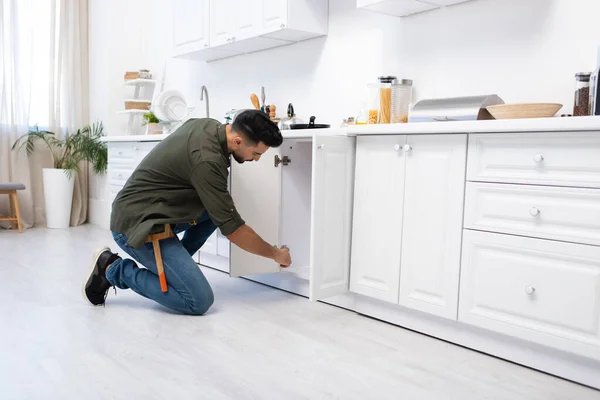
What Causes Water Damaged Kitchen Cabinets?
Moisture Is Usually the Main Problem
Most cabinet water damage starts with repeated exposure to moisture rather than one dramatic event. Slow leaks are often worse than flooding because homeowners don’t notice them right away.
Common causes include:
- Plumbing leaks under sinks
- Dishwasher steam and spills
- Refrigerator water line leaks
- High indoor humidity
- Poor ventilation
- Wet countertops
- Roof or window leaks nearby
- Flooding
- Improper cabinet installation
Homes in humid regions tend to experience cabinet stress faster, especially older kitchens without strong ventilation systems. Wood swells when the air’s damp. Then it shrinks when things dry up. Do that over and over, and joints get weak. Seams start to crack open.
Pros recommend to keeping indoor humidity between 40% and 50%. They say it helps protect cabinet durability and reduce moisture-related expansion.
Dishwashers Cause More Damage Than People Think
Dishwashers are one of the biggest hidden sources of cabinet damage. Steam escapes every time the cycle finishes. Over years, that moisture affects nearby cabinet doors and cabinet boxes.
When we install kitchens in older homes, we often find swollen side panels directly beside dishwashers. Many homeowners think it’s aging wood, but it’s actually long-term steam exposure.
A simple heat shield or moisture barrier can prevent a lot of that damage.
How Cabinet Materials Affect Water Damage
Not all cabinets react the same way to water exposure. Some other causes of water damage include materials like:
Solid Wood Cabinets
Solid wood handles minor dampness better, but it’s not immune — especially at joints and along the grain. However, still, minor swelling or stains can often be repaired and refinished with a long lasting finish.
That’s one reason many older solid wood kitchens are still repairable after decades.
Particleboard Cabinets
Let particleboard get wet and it soaks up moisture fast. Once that happens, it swells permanently. You lose structural integrity. In many cases, replacement ends up being the only realistic option.
Laminate Cabinets
Laminate cabinets hold up fine against surface spills. But let water sneak through to the substrate underneath? That’s when peeling and bubbling kick in. Once that damage shows up, you’re usually looking at partial restoration or panel replacement.
How Professionals Assess Cabinet Damage
Before beginning professional cabinet repair, professionals assess damage carefully to determine whether restoration makes financial sense.
At Dr. Cabinet, our team looks at:
- Cabinet box integrity
- Moisture levels
- Mold risk
- Door alignment
- Hinge condition
- Countertop exposure areas
- Water stains
- Joint separation
- Surface finish condition
Here’s something homeowners often miss: visible damage is sometimes only 30% of the problem. Moisture can travel behind cabinets or under flooring where you can’t see it.
That’s why professional moisture testing matters.
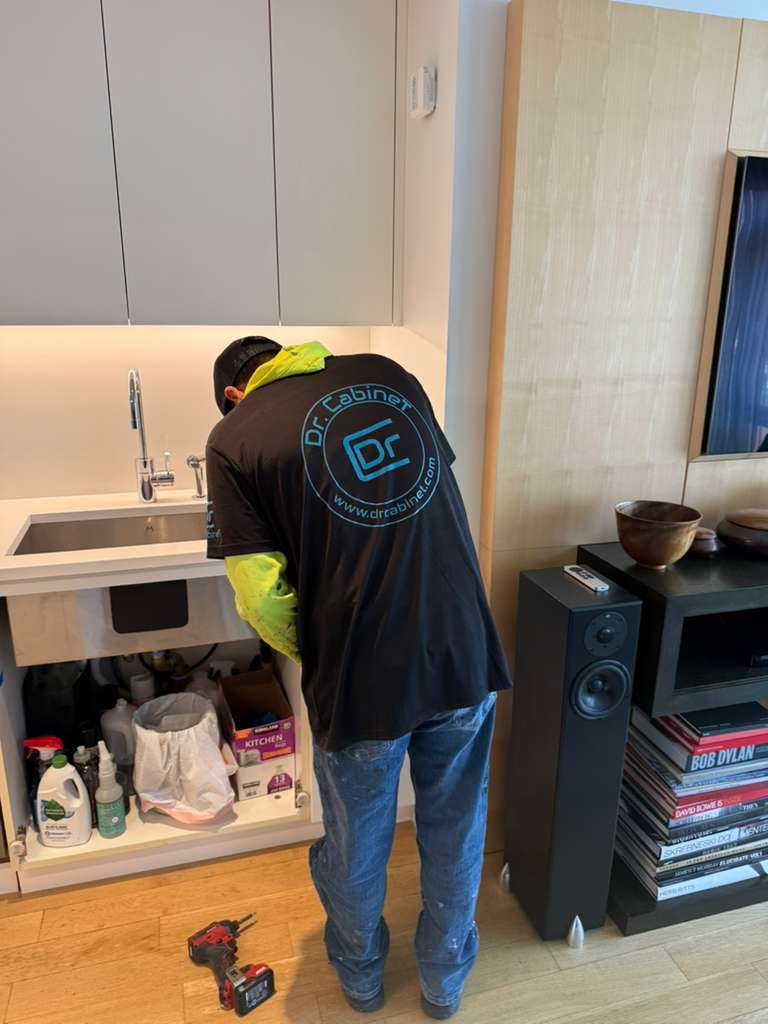
Signs the Cabinets May Need Replacement
- The cabinet boxes are collapsing
- Mold growth has spread extensively
- Water exposure lasted for weeks
- Multiple joints have failed
- The material has completely swollen
- Structural issues affect wall attachment points
If the cabinets can’t return close to their pre loss condition, replacement may actually save money long term.
Step-by-Step Process for Restoring Cabinet Water Damage
First thing: figure out how far the water went. Some cabinets can be saved. Others are too far gone and need partial replacement.
Step 1: Stop the Source
Fix the leak. Period. Bad pipe? Replace it. Dishwasher seal shot? Swap it out. People skip this step all the time. Then they’re dealing with the same damage six months later.
Step 2: Dry Everything Out
Bone dry. Pros use fans and dehumidifiers to pull moisture out of boxes, doors, and walls. Try to fix damp cabinets and you’ll get peeling paint, mold, and more headaches.
Step 3: See What’s Still Good
Check for:
Swollen doors
Soft spots on the base
Loose joints
Rusted hardware
Mold or stains
Gaps near the countertop
Solid wood usually cleans up nice. Particleboard? Once it swells, it’s done.
Step 4: Tear Out the Bad Stuff
Remove anything that’s soft, warped, or crumbling. Peeling laminate, rotted sections — get it out. Clean up any mold or gunk before moving on.
Step 5: Patch and Repair
Now you rebuild. Tighten joints. Swap hinges. Sand swollen edges. Fill cracks with wood filler. Don’t rush the prep. Leftover dirt or grease will mess up the paint every time.
Step 6: Sand, Paint, and Seal
Sand smooth. Then add paint or a protective coat that can handle kitchen life. Here’s a money saver: swap just the doors and refinish the boxes. Looks almost new for way less cash.
Step 7: Keep an Eye Out
Don’t set it and forget it. Check under sinks and behind the dishwasher now and then. Small leaks creep back. Wipe up spills fast. Keep air moving. That’s really all there is to it.
Cabinet Repairs That Usually Work Well
Not every damaged kitchen needs a full tear-out.
These cabinet repairs are commonly successful:
| Damage Type | Repair Method |
| Scratches and dents | Wood filler + refinishing |
| Loose hinges | Hardware replacement |
| Swollen edges | Sanding and sealing |
| Water stains | Restoration and repainting |
| Peeling laminate | Surface replacement |
| Minor mold spots | Cleaning and sealing |
| Cracked joints | Regluing and reinforcement |
Using Wood Filler Correctly Matters
A lot of DIY repairs don’t work because people ignore the prep work.
To apply wood filler properly, the damaged area must be:
- Completely dry
- Cleaned of dirt and grease
- Sanded lightly
- Free from loose paint or residue
If the area is not dried up completely and the moisture remains trapped inside, the filler will eventually crack or separat.
Cabinet Restoration Cost vs Full Replacement
Cost is biggest player here. Most homeowners choose restoration because it is cost-effective.
Here’s a realistic comparison for mid-range kitchens in 2026:
| Service | Average Cost |
| Minor cabinet repairs | $200–$900 |
| Cabinet door restoration | $500–$1,500 |
| Water damage restoration | $1,500–$4,500 |
| Full cabinet replacement | $8,000–$25,000+ |
It is clear that restoration often saves homeowners thousands while preserving existing layouts and countertops.
That’s especially useful in kitchens where the cabinet boxes remain structurally sound.
We recently worked on a home where a refrigerator line leaked slowly behind the lower cabinets. Homeowners thought they’d have to rip out the whole kitchen.
We looked things over. Ended up restoring most of the cabinets. Only had to replace two lower sections. The cabinet doors were carefully refinished to restore their appearance and provide a fresh, renewed finish. Added moisture protection too. Total bill? Less than half what a full replacement would’ve run them.
How to Prevent Further Damage
Once cabinets are repaired, prevention becomes crucial.
Moisture Control
Excessive humidity is the number one cause behind long-term cabinet damage.
What you can do:
- Use kitchen exhaust fans regularly
- Wipe spills immediately
- Install a dehumidifier if needed
- Check plumbing connections yearly
- Avoid standing water near cabinet bases
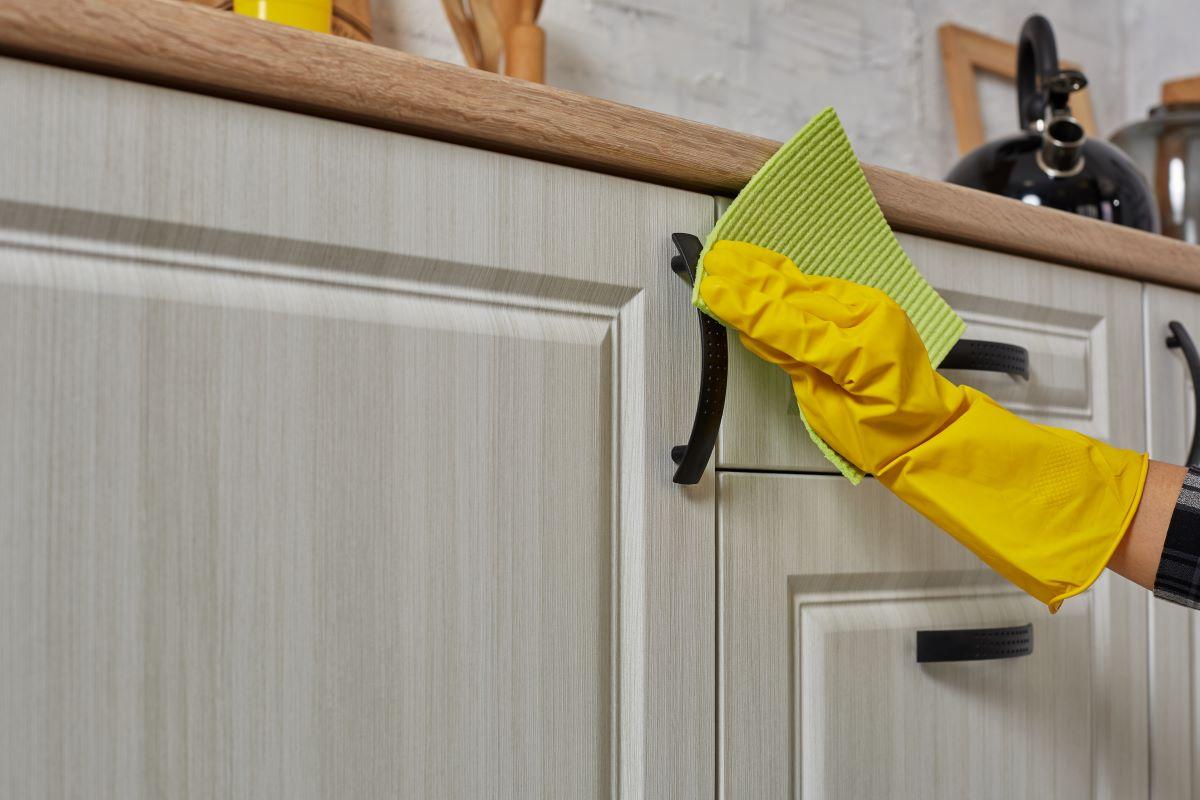
Clean Cabinets Properly
Improper cleaning causes slow surface breakdown.
Avoid:
- Abrasive pads
- Harsh chemicals
- Excessive water
- Oil-heavy cleaners
Instead, use mild cleaning solutions and wipe cabinets dry after cleaning.
Monitor Small Leaks
A slow drip under the sink? You won’t notice it at first. But a few months pass by and those cabinets will be ruined.
Here’s a pro tip most homeowners miss. Buy a cheap moisture alarm. Put one under the sink. Put another behind the fridge. These little devices don’t cost much, but they’ll warn you before serious cabinet water damage has time to set in.
Pests Can Damage Cabinet Doors Too
Everyone talks about water. But there’s more to worry about.
Crumbs, grease, and leftover gunk left inside cabinets? Rodents, termites, and roaches love that stuff. Throw damp cabinets into the mix and the damage spreads quick.
A simple fix — vacuum out your cabinet interiors every so often. That alone helps keep bugs away and those hidden spots clean.
We’ve opened up plenty of cabinets that looked perfectly fine from the outside. Inside was another story. Termites had been feeding behind the panels the whole time, and the damage was serious.
That’s why professional inspections matter when cabinets show unexplained weakness or odor.
If you’re dealing with cabinet water damage or swollen cabinet doors, Dr. Cabinet offers professional cabinet repair and restoration services for homeowners across the USA. A quick inspection can often determine whether your cabinets can be restored before replacement becomes necessary.
Why DIY Cabinet Repairs Sometimes Fail
DIY cabinet repair videos make restoration look easy. Sometimes it is. Sometimes it really isn’t.
The biggest homeowner mistakes include:
- Painting over moisture
- Using the wrong filler
- Ignoring mold growth
- Failing to dry cabinets completely
- Over-sanding laminate surfaces
- Using cheap replacement hinges
A flawless finish starts with how you prep. Skip that step and you’ll run into problems. Dirt, grease, moisture, and old gunk all get in the way — they stop paint from sticking and keep coatings from doing their job.
Another thing we’ve run into. Homeowners try to fix cabinets themselves. But end up sealing mold right inside. You can’t see it, but now it’s trapped in there. Down the road, that can mess with your air quality.
Timing Matters
Speed matters. The sooner you deal with a cabinet damage, the better your odds of saving them.
Let water damaged kitchen cabinets sit for weeks without any attention? Here’s what tends to show up —
- Structural weakness
- Mold growth
- Joint separation
- Finish failure
- Odor absorption
Quick professional drying can often save cabinets before those problems begin.
When Cabinet Restoration Makes the Most Sense
Restoration is usually the best option when:
- The layout still works well
- Countertops remain in good condition
- Damage is limited to certain areas
- Cabinet boxes remain stable
- Homeowners want to save money
- The kitchen has quality solid wood cabinetry
Older custom-built cabinets are often worth restoring because the materials are stronger than many modern stock cabinets.
Frequently Asked Questions
Can water damaged kitchen cabinets be repaired or do they need replacement?
Depends on how far it's gone. If it's little swelling or some stains, you can usually fix that. But if the cabinet boxes are falling apart or mold's taken over? You're buying new ones.
What causes cabinet doors to swell or warp?
Moisture and humidity. Dishwasher steam. A leaky pipe. Spills you didn't wipe up. Poor airflow. All that water gets into the wood or particleboard and swells it up over time.
How much does cabinet restoration cost compared to replacement?
Way less. A few hundred bucks for minor repairs. Full replacement? You're looking at thousands. Depends on your kitchen size and what materials you go with.
How do you know if cabinet water damage is structural?
Check the bases. Are they soft? Joints pulling apart? Shelves sagging? Lots of swelling? Mold anywhere? Any of those means structural trouble. Get a pro to look at it before you decide.
Can mold grow inside damaged kitchen cabinets?
It grows under sinks or behind dishwashers. If you smell something musty or see dark spots, don't brush it off.
Should I repair or replace damaged cabinets during a remodel?
If the boxes are still solid, fix them. Makes more sense financially. A lot of people do that. Keep the boxes, then swap the doors, paint, and hardware. New look without the full replacement price tag.
Conclusion
Some problems get worse the longer you wait. Cabinet damage is one of them. A slow leak under the sink. Humidity that keeps warping your doors. Pests nesting behind your base cabinets. Leave any of that alone and the repair bill just goes up.
But here’s the upside. Most damage can be brought back to how they were before. A good pro can do it without ripping everything out. You just need someone honest to take a look and tell you what’s really going on.
Dr. Cabinet works with homeowners all over the country. Installation. Repair. Restoration. That’s what we do. Notice damage in your kitchen? Get a free on-site estimate. Contact us at 201-212-5477. The earlier you figure out what you’re up against, the more choices you’ll have.