
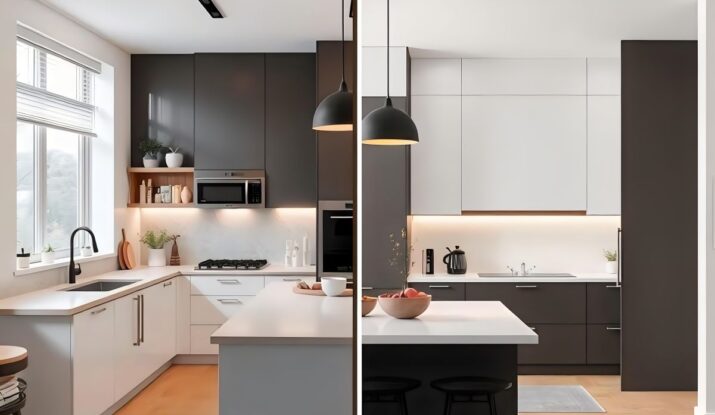
You’ve looked at your kitchen for five years. The cabinets are fine. They just look tired.
You know refinishing is an option. But you need to see it to believe it.
That’s where refinishing kitchen cabinets before and after photos come in. You’ve seen the before and after photos online. White kitchens. Clean lines. Dramatic transformations. And you’re thinking — can my kitchen actually look like that?
Short answer: probably yes. But before and after photos leave out a lot. This guide fills in the gaps.
What Good Before and After Photos Actually Show You
A real before and after photo tells you more than any salesperson can. Here’s what to look for when you’re browsing:
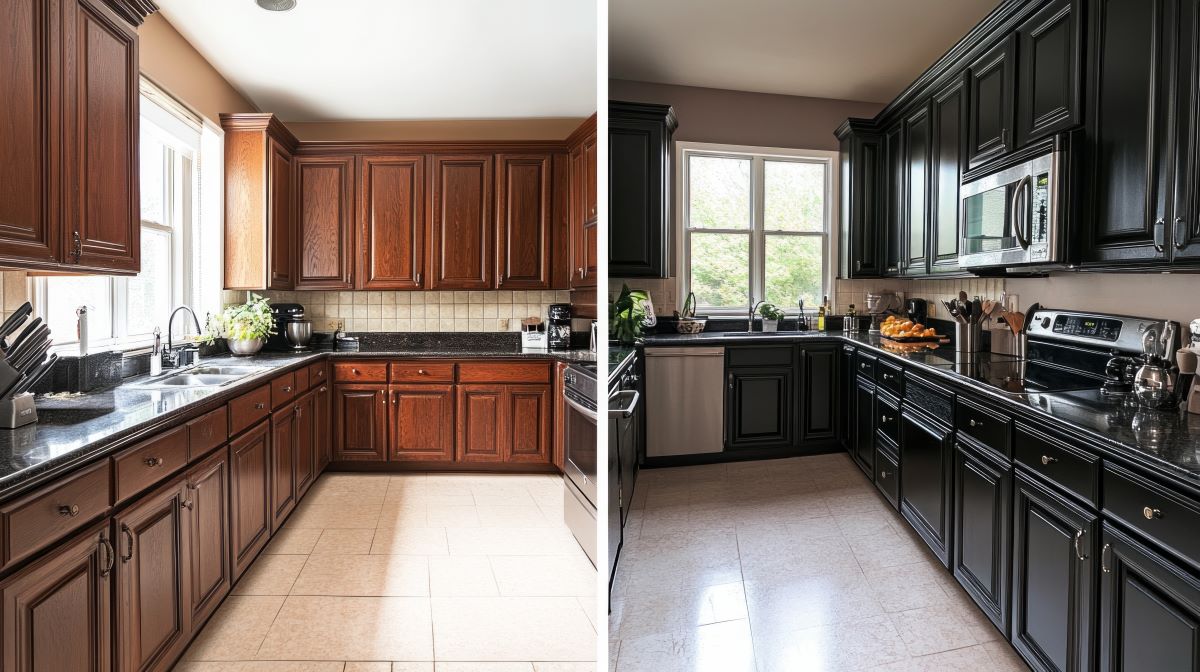
Color depth. Did the cabinets go from dark honey oak to crisp white? Or from builder beige to navy? Color is the biggest visual change refinishing delivers — and photos prove what’s possible.
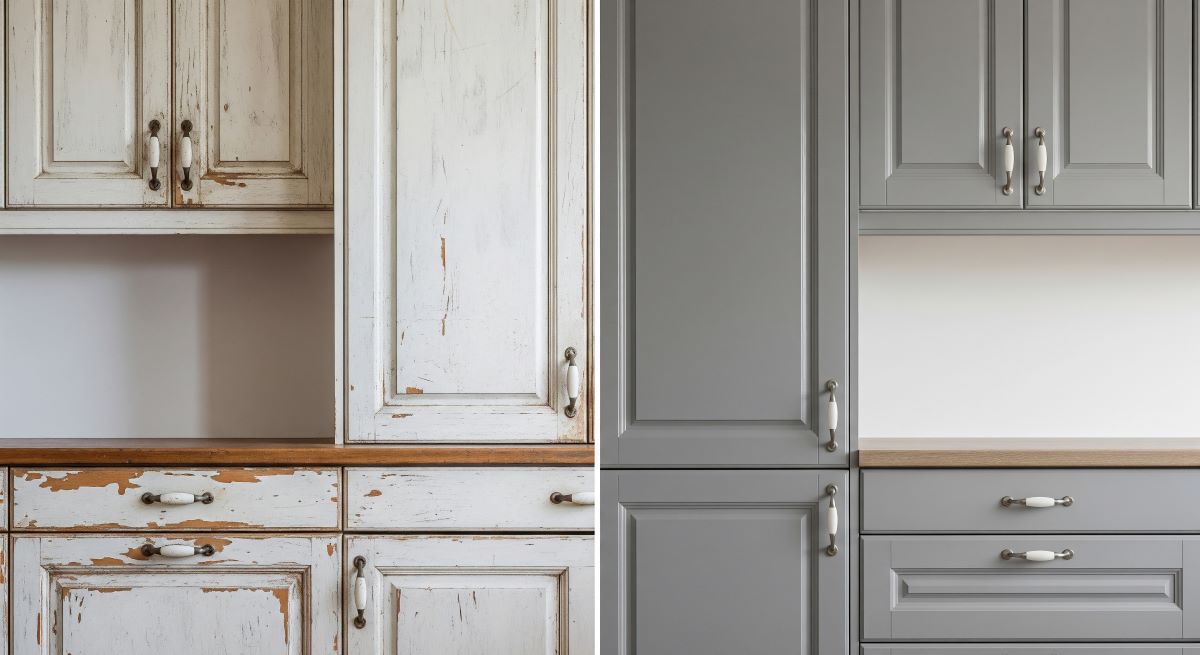
Wood grain. Some finishes preserve it. Others cover it completely. A close-up shot of the finish will tell you which. If there’s no close-up in the gallery, that’s a red flag.
Damage coverage. Water rings near the sink. Grease buildup by the stove. Scratch marks from years of use. Good before photos show these honestly. Good after photos show whether they’re gone.
Gloss level. Flat, satin, and high-gloss all look dramatically different in person. Photos shot in natural light give you the clearest read on this.
One rule when evaluating photos: Same room, same angle, same time of day. If the lighting changed between the before and after shot, you’re looking at marketing — not results.
What Different Wood Types Look Like After Refinishing
Not all wood responds the same way. Here’s a quick reference:
| Wood Type | Takes Paint Well? | Grain Visible After? | Best Approach |
| Oak | Yes | Strong grain shows through | Great for textured or rustic look |
| Maple | Yes | Very little grain | Ideal for smooth, modern finish |
| Cherry | Sometimes | Grain shows when stained | Rich stain results; paint needs prep |
| Birch | Yes | Moderate grain | Budget-friendly paint jobs |
| Pine | No (knots bleed) | Heavy grain | Needs high-grade primer; tricky |
Oak is the most common wood in older kitchens — and the most searched in before and after photos. It takes paint well, but the grain shows through. That’s not a flaw. It’s a texture choice. Some homeowners love it. Others want a smoother, more modern result.
Decide what you prefer. If you want zero grain visibility, maple or birch are your best candidates.
Refinishing vs. Cabinet Refacing: Which One Shows Up Better in Photos?
This is a question worth answering before you start calling contractors.
A refinisher just changes the surface of what you already have. Same doors and same drawer fronts. But new color and finish. It’s the lower-cost option. Mostly a common DIY project.
Refacing replaces the cabinet doors and drawer fronts entirely. It keeps the original cabinet boxes. You can change the door style. Flat panel to shaker, for example. Refinishing cannot do it.
| Refinishing | Refacing | |
| Changes color | Yes | Yes |
| Changes door style | No | Yes |
| Average cost (pro) | $2,000–$5,000 | $4,000–$10,000 |
| Time (pro job) | 5–7 days | 3–5 days |
| Mess level | High (dust, fumes) | Medium |
| DIY possible? | Yes, with skill | Not really |
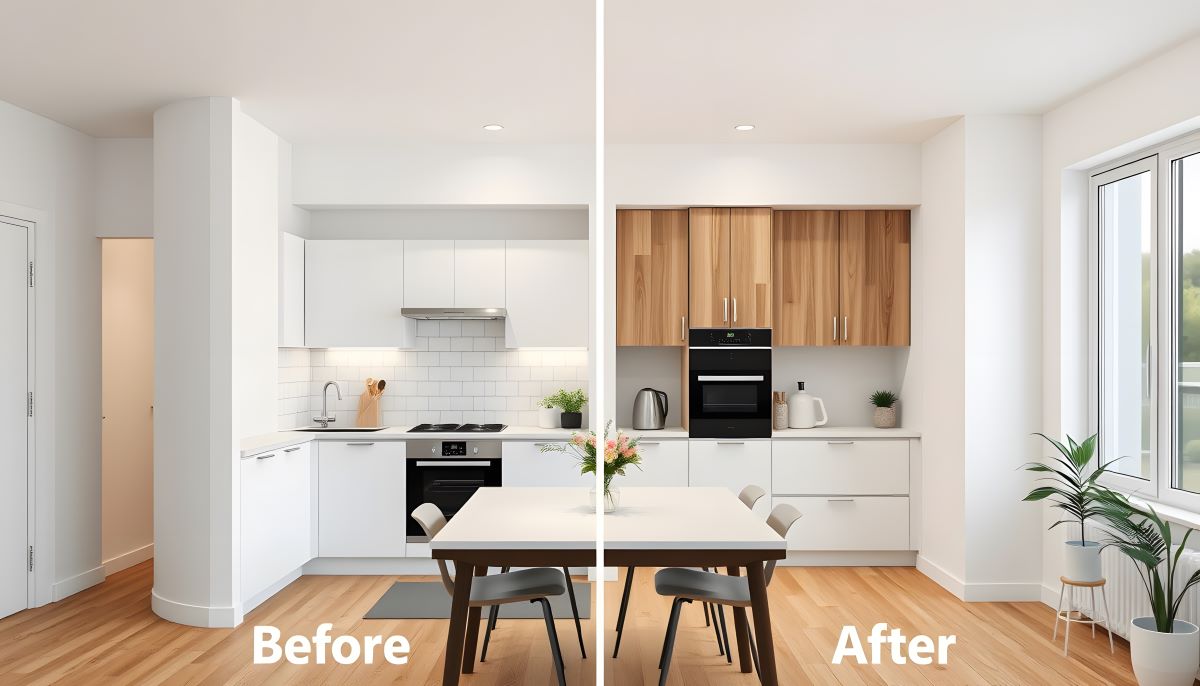
In photos, refaced cabinets often look more uniformly new — because the doors have never been touched. No old sanding marks, no previous coats of paint color to level through.
But if your cabinet door style is fine and the boxes are solid, refinishing gets you 90% of the same visual result at half the price.
Honest advice: If your doors are solid but dated in color, refinish. If the doors themselves are falling apart or you hate the style — reface. Don’t put good paint on bad doors.
Real Homes: Two Case Studies Worth Knowing
Case 1 — Florida Kitchen, Soft White Transformation
A homeowner wanted a brighter kitchen. She thought she needed new flooring and a new range hood.
We suggested she start with the cabinets.
The result: Benjamin Moore Chantilly Lace, two coats of primer, two coats of paint. The upper cabinets’ doors replaced with glass doors. Added open shelving near the breakfast area for a lighter, more modern feel.
She kept the old flooring. Kept the old range hood. The walls paint looked brighten. Even the backsplash worked again.
She saved $6,000 by doing the cabinets first.
Case 2 — Texas Kitchen, 1992 Golden Oak
Original oak cabinets. Golden finish. The look of every designer kitchen from that era.
The finish was gone near the stove. Grease had soaked in. She wanted white but didn’t want to lose the wood feel entirely.
First, we stripped, sanded, and primed. Then we applied Sherwin Williams Emerald Urethane Trim Enamel. Just two coats of it in soft white. We kept the original drawer fronts and added soft-close slides.
When the refinished cabinets were done? She held off on the new countertops she’d been planning. The kitchen looked good enough without them. The kitchen island became the focal point of the space.
She saved $4,000.
What Photos Never Show You About Refaced Cabinets
Before and after photos are honest about results. They’re not honest about process. Here’s what you won’t see in any gallery:
- Sanding dust. It gets into every room. Cabinets, appliances, drawers, surfaces you thought were protected. Plan for it.
The timeline. A professional job takes 5–7 days. A careful DIY job often takes two weekends. During that time, your kitchen is partially or fully out of commission. - Hardware holes. Change your pulls or knobs and the old holes may not line up. They need to be filled and re-drilled.
- Lighting’s effect on finish. The same cabinets look completely different under old fluorescent bulbs versus good natural light. Before you assume the result looks off — check the lighting first.
- The few coats that became six.
The world of online pictures is filtered. Don’t believe everything. No matter, how gorgeous or amazing they look.
How to Spot a Real Before and After vs. a Staged One
Not every photo online is what it seems. Here’s how to tell:
- Same countertops in both photos — if the counter changed, so did the budget
- Same backsplash — new tile makes old cabinets look better automatically
- Same flooring — fresh floors change the space around them
- Same fridge — if a new stainless appliance appeared, the cabinets aren’t working alone
Real transformations show the same imperfect kitchen, just with better cabinets. That’s the honest version.
For genuinely unfiltered before and afters, Houzz is one of the better sources. Filter by “budget” and “date added” and you’ll find real homeowners who aren’t trying to sell you anything.
Paint Brands Trusted By a Cabinet Refacing Company: Does It Actually Matter?
Yes. And the big difference shows up 18 months later, not on day one.
Two brands hold up consistently well on cabinets:
Benjamin Moore Advance —
levels like oil paint but cleans up with water. Hard finish. Long-lasting. Benjamin Moore White Dove is one of the most consistently recommended colors for kitchens. Warm white. Not stark. Looks good in real houses with imperfect lighting.
Sherwin Williams Emerald Urethane Trim Enamel.
Slightly harder finish. Slightly faster dry time. Also excellent.
Budget brands.
Behr, Valspar, Glidden. Can work, but we’ve seen them peel, chip, and yellow on cabinets. You save $50 upfront and spend three weekends fixing it later. Not a good idea.
One more thing: buy from an actual Benjamin Moore or Sherwin Williams store, not a big box retailer. The staff knows cabinets. The paint is mixed better. Worth the extra trip.
FAQ: Refinishing Kitchen Cabinets Before and After Photos
What’s the average cost of refinishing wood kitchen cabinets?
Professional jobs in the U.S. run $3,000–$7,000. This is for a standard 10×10 kitchen. DIY costs $500–$1,500 in materials. Not counting tools like sanders and sprayers. Most homeowners underestimate the tool cost.
What wood cabinet color is outdated?
Honey oak and golden maple look dated to most buyers. So does heavy gloss dark cherry. White, soft gray, navy, and sage green are strong right now. But trends change. Pick what you like looking at every day.
What color kitchens are in for 2026?
Warm whites and soft greiges (gray + beige). Two-tone kitchens (dark base + light upper cabinets). Also muted greens like “Rainwashed” and “Pewter Green.” Avoid stark pure white — it shows every fingerprint.
Is refinishing cabinets actually worth it?
Yes, if your cabinet boxes are solid and the door style isn’t broken. No, if you have laminate, veneer peeling everywhere. Or water-damaged particle board. Refinishing won’t fix structural issues. It only changes the surface.
How long does a professional refinish last?
8–12 years with normal use. A careful DIY job: 5–8 years. A rushed one: you’ll see peeling within 6 months. The prep work determines the lifespan, not the paint.
What’s the single biggest DIY mistake?
Skipping the primer, or using cheap primer. Without a high-bonding primer, the topcoat peels off in sheets. It’s the most common rescue call we get.
Conclusion: Before You Call Anyone, Do This First
Refinishing kitchen cabinets before and after photos are a great starting point. They show you what’s possible. They help you compare color choices, gloss levels, and grain changes. But photos don’t show the dust, the time, or the small mistakes that turn a dream into a mess. Your family and kids don’t care about clean lines if the kitchen is torn apart for three weeks. Make the process fun by planning ahead and knowing the real details.
If the bones are good — solid boxes, doors that hang right, no rot — refinishing will work. If you’re finding problems in every cabinet, it’s worth a conversation about whether refacing or replacing makes more sense.
Take a before photo of your own kitchen. It’s easy to forget how tired it actually looked once it is completely transformed.
If you want a straight answer about what your kitchen actually needs — refinish, reface, or replace — Dr. Cabinet offers free on-site estimates across the U.S. No pressure. Just an honest look.