
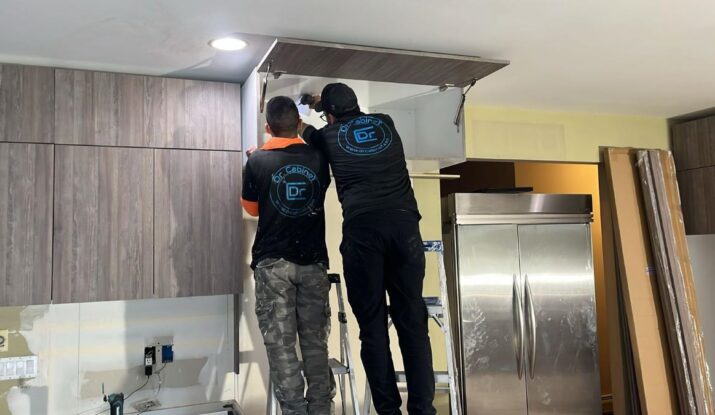
The Ultimate Guide to Refinishing Built Ins for a Fresh Look
Built-in cabinets are workhorses. Imagine refinishing built in cabinets in your kitchen or living room bookcases with a fresh coat of paint, crisp white or rich dark stain without the mess of demolition. They store our dishes, display our favorite books, and keep clutter out of sight. But after years of service, even the sturdiest built-ins start showing their age. Faded paint, scratched surfaces, and outdated styles can make your whole room feel tired.
That’s where refinishing comes in. Unlike a full replacement (which can cost a small fortune and take weeks), refinishing built in cabinets gives you a dramatic transformation for a fraction of the price and hassle. This guide is for anyone who’s looked at their years ago old built-ins and thought:
- “I wish these looked new again”
- “There’s got to be a cheaper option than replacing everything”
- “Could I actually do this myself?”
We’ll cover everything from costs and color choices to DIY tips and when to call the pros. By the end, you’ll know exactly how to make your cabinets look like they belong in a brand-new home.
Why Refinishing Built In Cabinets Is the Smartest Upgrade
If your cabinets are structurally sound but cosmetically dated, refinishing built in cabinets is hands-down the most practical way to revive them. Here’s why so many homeowners and designers choose this route:
It Costs Way Less Than Replacement
While new custom cabinets can run anywhere from $5,000 to $20,000+, refinishing typically costs between $1,500 and $4,000 if you hire professionals—or just a few hundred dollars for a DIY approach. That’s a massive savings, especially if you love the layout of your current built-ins.
You Get a Custom Look Without Custom Prices
Refinishing lets you completely rethink your cabinets’ style. Want to modernize builder-grade cabinets with shaker-style doors? Prefer a moody, dark color for your home library? Or maybe you’d rather keep things light with a bright white paint refresh? The choice is yours. You can even swap out hardware for an instant upgrade.
It’s Faster (and Less Stressful)
For NYC kitchen cabinets especially, a full cabinet replacement means weeks without a functional kitchen or living space. Refinishing, on the other hand, can often be done in under a week—sometimes just a long weekend for smaller projects. Less dust, less disruption, and way less takeout.
It’s Kind to the Planet
Tearing out perfectly good cabinets creates unnecessary waste. Refinishing extends their life, keeping materials out of landfills. Plus, you preserve the character of original built-ins that might have features new cabinets can’t replicate.

The Cost Guide to Refinish Built-In Cabinets
Budgeting for this refinishing built in cabinets project? Prices vary greatly depending on DIY or professional hire out, but here’s a realistic breakdown:
Professional Refinishing: $1,500–$4,000
This includes labor, materials (high-quality paint, sealants, etc.), and typically covers:
- Repairing dings, nail holes, and imperfections
- Sanding down face frames and doors
- Applying primer and multiple coats of paint or stain
- Sealing with a durable top coat
DIY Refinishing costs around $200–$800
If you’re skillful, you can save significantly by doing the work yourself. Costs include:
- Paint or stain ($30–$100 per gallon)
- Wood filler, latex caulk, and sanding supplies ($50–$150)
- New hardware (optional, $50–$300)
- Tools (if you don’t already own brushes, rollers, etc.)
What Impacts the Price?
- Cabinet Size – More doors, drawers, and shelves mean more materials and time.
- Prep Work Needed – Fixing damaged back walls or replacing drawer fronts adds cost.
- Paint Quality – Higher-end paints last longer but cost more upfront.
- Extras – Adding crown molding or lighting? Budget accordingly.
Pro Tip: If your built-ins are in rough shape, consult a pro like Dr. Cabinet first. Sometimes a simple re doing job might have more serious issues (like water damage) that must be solved.
Step-by-Step: How to Refinish Built-In Kitchen Cabinets Like a Pro
If you’re dealing with kitchen cabinets, bookshelves, or family room built-ins, follow the same basic steps. Here’s exactly how to do it, even if you’ve never even painted before.
1. Prep Like Your Results Depend on It (Because They Do)
When refinishing built in cabinets, 80% of success is prep and 20% is paint. Skip steps here, and you’ll see chips and peeling in no time.
- Empty & Clean Everything
Remove all items from shelves and drawers. Wipe down surfaces with a degreaser (especially important for kitchen cabinets near cooking areas). Grease and grime keep paint from sticking. - Remove Doors & Hardware
Take off cabinet doors, drawers, and all hardware (hinges, knobs). Label each piece with painter’s tape so you know where it goes later. - Repair Imperfections
Patch up any nail holes or dents with wood filler – just smooth it on, let it dry completely, then sand it flush. For those tiny gaps where your cabinet frames meet the wall, a bead of latex caulk does wonders to create clean, polished lines.
2. Now for sanding – this step makes huge difference!
- Gently go over every surface with 120-grit sandpaper. You’re not trying to strip the wood bare, just rough up the finish enough so your new paint will stick like glue.
- If you’re working with prefinished cabinets that have that shiny coating, a quick wipe-down with deglosser will take care of that slick surface
3. Prime (Even If You Think You Can Skip It)
- Primer helps paint stick and prevents stains from bleeding through.
- Use a stain-blocking primer if your cabinets are dark and you’re going lighter.
- Let it dry completely—overnight is best.
4. Paint or Stain: The Fun Part
- For paint job: Use a high-quality acrylic enamel (it’s durable and self-leveling). Apply with a foam roller for flat surfaces and a brush for details.
- For stain: Wipe on with a cloth, let it sit, then wipe off excess for even color.
- Always do multiple thin coats (2-3) instead of one thick one to avoid drips.
5. Protect Your Hard Work
- Once paint/stain is dry, add a clear top coat (like polyurethane) for extra durability, especially on high-touch areas like drawer fronts.
- Reattach doors and hardware once everything’s fully cured (check the paint can for timing).

Upgrading Hardware & Fixtures: The Icing on the Cake
After refinishing built in cabinets, new hardware takes them from “nice” to “wow.” Changing old hardware with the smart fixtures is the easiest way to lock in that polished, intentional look. Here’s how to do it right:
Choosing Hardware That Elevates Your Style
Knobs and handles aren’t just useful, they decorate your cabinets as well. Keep these tips in mind when shopping them:
- Finish first: Match metals to other elements in the entire room (faucets, light fixtures). Brushed nickel? Oil-rubbed bronze? Go cohesive.
- Size matters: Oversized pulls suit modern kitchens, while petite knobs charm cottage-style spaces.
- Test the feel: Before buying a full set, get one sample to check comfort—especially important for drawers you open daily.
Pro Tip: If reusing existing screw holes for refinishing built in cabinets, bring an old pull to the store to match sizing. Want new hole placements? Wood filler and touch-up paint will disguise the old ones.
Installation Made Simple
You’ll need:
- A screwdriver (magnetic tips save frustration)
- Painter’s tape to mark drill spots
- A $5 level—this separates “handmade charm” from “hot mess”
For perfect alignment:
- Tape templates to new doors/drawers to visualize placement
- Use the level to mark screw holes before drilling
- Attach hardware loosely at first, adjust for straightness, then tighten
Lighting That Shows Off Your Work
Good lighting makes your refinishing built in cabinets job shine (literally). Consider:
- LED strip lights under upper cabinets (plug-in versions avoid wiring)
- Battery-powered puck lights inside glass-front cabinets
- Professional install for hardwired options (especially near water sources)
Safety Note: Any electrical work beyond basic plug-in fixtures should involve a licensed electrician—especially in kitchens.
Final Touches That Impress
While you’re at it:
- Replace old hinges with soft-close versions (life-changing for noisy cabinets)
- Add decorative crown molding to bare tops (pre-painted pieces save time)
- Install slide-out trays in deep lower cabinets (suddenly find your food processor!)
Remember: Great hardware should feel substantial in your hand and complement—not compete with—your beautiful new finish. Take your time choosing, and you’ll love the results for years.

Can You Actually Refinish Builder-Grade or Manufactured Wood Cabinets?
When refinishing built in cabinets, you might wonder whether your basic builder-grade cabinets or manufactured wood built-ins even worth refinishing. The good news? Absolutely yes! While they require slightly different approaches than solid wood, you can absolutely transform these budget-friendly cabinets into something that looks custom and high-end.
Builder-Grade Cabinet Refinishing Secrets
Those mass-produced cabinets builders install can look surprisingly luxurious with the right techniques:
- Gentle sanding is key – Unlike solid wood, these often have thin veneers. Use 150-grit sandpaper and let the tool do the work – no heavy pressure needed
- Filler is your best friend – Those tiny gaps at the edges? A little wood filler fills them to disappear
- Prime like a pro – Skip the all-purpose primer and get one specifically made for slick surfaces (look for “high adhesion” on the label)
- Caulk for clean lines – Run a bead of paintable latex caulk where cabinets meet walls for a built-in look
Manufactured Wood Made Marvelous
Your MDF or particle board cabinets can get a gorgeous makeover too:
- Skip the heavy sanding – Just a light scuff with fine-grit paper (220+) to help paint stick
- Water-based products work best – They’re less likely to warp the material than oil-based options
- Consider paint over stain – Manufactured wood doesn’t take stain evenly, but paint gives perfect coverage
- Reinforce weak spots – Use wood hardener on any areas that have swollen or softened over time
Pro Tip: For either type, painting (rather than staining) typically gives the most foolproof, professional-looking results. A quality semi-gloss paint will make even the most basic cabinets look custom.
The best part? When done right, no one will ever guess these started as budget-friendly cabinets. It’s all about working with what you have rather than against it – and the results can be stunning! Refinishing built in cabinets makes this possible.
Working With Your Cabinet Style: Old Built in, Back Walls
Every set of built-in cabinets has its own character. Think of the pristine lines of shaker doors, the classic charm of crown molding, or the simplicity of lower cabinets. Here’s how to work with your cabinet style instead of against it for the best results.
Shaker-Style Cabinet Doors: A Blank Canvas
Those simple, recessed panels are a dream to refinish because they take paint and stain so evenly. To make them shine:
- Highlight the recessed center by using a slightly darker/lighter color on the panel (or vice versa on the frame)
- Update the look with modern pulls or go knob-free for ultra-minimalist vibes
- Fix worn edges with wood filler before painting—these high-touch areas show wear first
Crown Molding: The Finishing Touch
That decorative top trim can date your cabinets or elevate them. Your options:
- Refresh it: Clean lines with painter’s caulk, then repaint to match new cabinet color
- Replace it: Swap bulky 90s molding for slim modern strips (a miter saw makes clean 45° cuts)
- Remove it: Creates a streamlined look—just be prepared to patch ceiling imperfections
Lower Cabinets: The Workhorses
They take more abuse than uppers, so they need special love:
- Durable finishes: Semi-gloss paint stands up to kicks and spills better than matte
- Toe-kick revival: Paint this often-neglected area the same color for a seamless look
- Functional upgrades: Add soft-close hinges or pull-out shelves while you’re refinishing
Open Shelving & Glass Fronts
For built-ins with display areas:
- Paint interiors a contrasting color for depth
- Line shelves with adhesive wallpaper for easy personality
- Lighting magic: Battery-operated LED strips make glass cabinets glow
When to Call for Backup
Some jobs need a pro’s touch:
- Warped doors that won’t close properly
- Intricate carvings that need careful stripping
- Structural issues like water-damaged frames
Remember: Your cabinets’ style isn’t a constraint, it’s inspiration. A 1980s oak built-in can become farmhouse-chic with the right paint color, while old laminate can convert into a smart modern view. The secret is understanding what you’re working with and choosing techniques that enhance (rather than fight) its natural character.
What’s the Biggest Mistake People Make?
Rushing the drying process! Each coat needs full drying time:
- Primer: 24 hours
- Paint between coats: 4-6 hours
- Final cure: 3-7 days before regular use
You may want to put everything back quickly but be patient. Give it time to get a long-lasting finish that won’t chip or peel.

Should You DIY or Hire a Pro for Your Cabinet Refinishing?
When you plan to refinishing built in cabinets, this is the big question that comes to your mind. You naturally think if this a job for your inner handyman, or should you call in the experts? There’s no one-size-fits-all answer, so let’s break it down to help you decide what’s best for your cabinets and your sanity.
The DIY Route: For Hands-On Homeowners
If you’re considering tackling this entire project yourself, here’s what you’re signing up for:
What You’ll Need:
- Essential tools: Sandpaper (120-220 grit), putty knife, paintbrushes, foam rollers are all basic tools.
- Safety tools: rubber gloves, safety goggles, respirator mask
- Materials: wood filler, latex caulk, primer, paint or stain, top coat
- Plenty of patience (this isn’t a one-day project)
When DIY Makes Sense:
✔ You’re refinishing a small area (like a single bookshelf)
✔ You enjoy hands-on projects and have some painting experience
✔ Your cabinets are in good shape with minimal repairs needed
✔ You’re not on a tight timeline (DIY always takes longer than expected)
The Reality Check:
Be prepared for sore arms from sanding, the occasional paint drip, and learning as you go. The upside? You’ll save money and gain serious bragging rights.
When to Call in the Professionals
Some projects are just better left to the experts while you rest. Consider hiring a pro if:
Your cabinets need:
- Structural repairs or major surface restoration
- Complex finishes like glazing or specialty stains
- Detailed work on intricate moldings or carvings
- Complete color changes (especially dark to light)
Your situation calls for:
✔ Refinishing an entire kitchen’s worth of cabinets
✔ Working with high-end materials you don’t want to risk damaging
✔ Getting flawless, factory-like results
✔ Saving your weekends (pros work while you relax)

Why Choose Dr. Cabinet’s Refinishing Service?
At Dr. Cabinet, we’ve transformed hundreds of built-ins with our professional refinishing service. Here’s what sets us apart:
Our Process:
- Free consultation – We’ll assess your cabinets and give honest advice
- Meticulous prep work – The secret to long-lasting results
- Commercial-grade products – Finishes that stand up to daily life
- Precision application – No brush marks, no drips, no imperfections
- Final inspection – We’re not done until you’re thrilled
The Dr. Cabinet Difference:
- 5-year warranty on all our work
- Dust-free sanding systems
- Custom color matching
- Flexible scheduling to fit your life
Whatever you decide, DIY or go pro, the thing that actually matters is you get flawless cabinets at the end. We’re happy to chat about your specific tasks. Sometimes just an expert advice can make all the difference.
FAQs: Your Cabinet Refinishing Questions Answered
You’ve got questions—we’ve got answers! Here are the most common things people wonder before refinishing their built-ins:
How long does it take to refinish cabinets?
It depends! A small bookshelf might be a weekend project, while a full kitchen can take 5-7 days (mostly drying time between coats). Pro tip: Don’t rush the cure time—that last coat needs at least 48 hours before you start using cabinets normally.
Can I change my cabinet color from dark to light?
Absolutely—it just takes an extra step. A stain-blocking primer (like Kilz or BIN) prevents dark stains from bleeding through your new white or light paint. Two thin coats of primer = peace of mind.
What’s better: paint or stain?
Paint is forgiving (hides imperfections) and works on any material
Stain shows wood grain but only works on real wood
When in doubt, paint gives more consistent results—especially on builder-grade cabinets.
Do I need to sand everything down to bare wood?
Nope! Just a light scuff-sand (120-150 grit) so the new finish sticks. Exception: If your cabinets have peeling varnish, you’ll need to sand those spots smooth.
How do I deal with sticky drawers or doors?
First, clean the tracks with rubbing alcohol. If that doesn’t help:
Rub paraffin wax (like a candle stub) on the tracks
Adjust hinges with a screwdriver
Replace old slides with soft-close versions ($10-$20 per drawer)
Will refinishing last as long as new cabinets?
With good prep and quality paint? Easily 8-12 years. Kitchens might need touch-ups sooner (thanks to all that cooking splatter), while living room built-ins often look fresh for 15+ years.
Can I just paint the cabinet doors and leave the frames?
Technically yes, but we don’t recommend it—don’t forget the color match will never be perfect, and the difference shows. Budget extra time to do all visible surfaces.
What’s the one thing pros do that DIYers often skip?
Degreasing! Kitchen cabinets especially collect invisible grease that ruins paint adhesion. A mix of TSP substitute and water cuts through it—worth the 10-minute wipe-down.
Conclusion
Giving your built-ins a fresh new look through refinishing built in cabinets is so much more than just painting. It’s a smart way to completely transform your space – whether we’re talking about your kitchen cabinets, home office bookshelves, or family room built-ins – without the huge cost and mess of full replacement. The beauty of refinishing built in cabinets? You keep all the great storage you already have while getting to choose exactly how they’ll look. Want to go brighter with white paint? Love the idea of rich, dark cabinets? Or maybe just refresh the same color with a flawless new finish? With refinishing built in cabinets, it’s all possible while working with what you already own.
The best part? You have affordable options. If you love DIY projects and have the time to dedicate, refinishing can be a rewarding weekend (or two) of work. Of course, if you’d rather leave refinishing built-in cabinets to the experts, Dr. Cabinet has you covered. Our team handles all the prep work, uses top-quality materials, and applies professional techniques to give your cabinets a flawless finish that lasts. The result? Your built-ins won’t just look brand new—they’ll feel like you got a whole new set of kitchen cabinets or bookshelves.
Contact Dr. Cabinet today for expert refinishing built in cabinets services, and let’s make those cabinets the highlight of your house!