
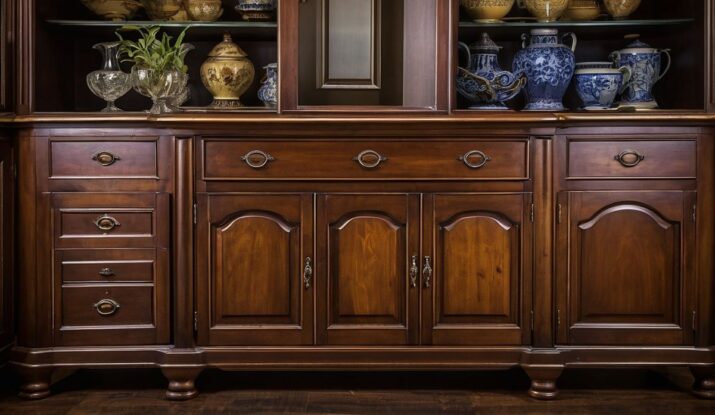
Your old wood cabinets are making your whole kitchen look out of date. But there is no need to get them replaced. A simple refresh saves you thousands, giving you a beautiful new-looking kitchen.
This is your complete guide to transforming your old wood cabinets. We’ll walk through assessing their condition, deep cleaning, repairing, and choosing between paint or stain. You’ll also learn about updating hardware, adding molding, and the professional refacing option.
Let’s get started.
Assess the Condition of Your Old Wood Cabinets
Before you grab any supplies, put on your detective hat. Taking a few minutes now to really look over your old wood cabinets can protect you from a major headache—and a hit to your wallet—down the road. Let’s get a clear picture of what you’ve got to work with.
Check the Structure First
Forget about color for a second. The real question is: are these cabinets put together well? Because no amount of paint can fix cabinets that are coming apart.
- Test the boxes: Press the sides and shelves of your cabinet boxes gently. Are they strong and firmly attached to the base, or do they stagger?
- Inspect the joints: Look at the corners. Are the joints still tight, or are they coming apart?
- Check for water damage: Don’t skip this—look under the sink and along the bottom. Puffy wood, dark spots, or soft areas are warning signs you don’t want to ignore.
Examine the Doors and Drawers
Now, look at the moving parts. Their condition determines how much work you’re in for.
- Do they hang right? Open and close all the doors. Do they swing smoothly and sit flush when closed, or are they crooked and misaligned?
- Are the hinges secure? Grab the door and give it a very slight wiggle. Are they pulling their screws out of the wood? They are an easy fix.
- Test the drawers: Pull your drawers all the way out. Do they slide easily? Check the glides underneath. Are they bent or broken?
Identify the Wood and Finish
Knowing your cabinets’ material and the finish will guide your next steps.
Look for the grain: Can you see a strong wood pattern? If you see prominent parallel lines, you likely have oak cabinets. This is good news. That solid wood is perfect for refinishing.
Understand the existing finish: Is the existing surface just dirty? Or is it also cracked, peeling, or chipping off in large pieces? A finish that’s failing everywhere needs to be completely removed.

Make the Call: DIY, Reface, or Replace?
Your inspection answers the big question: what’s the best path forward?
Green Light for DIY: If the frames are rock-solid and the doors just need TLC, you’re a perfect candidate for a DIY refinish or paint job.
Think Professional Refacing: When the cabinet boxes are good but the doors are not, replacing just the doors and drawer fronts (refacing) is a brilliant cost effective option.
Consider Replacement: When the structure is water damaged, or you don’t like the layout, go for full replacement. It might be the smarter and long-term investment.
Here’s the bottom line: Giving your existing cabinets a fresh look yourself costs a tiny fraction of the price of installing new cabinets. That simple fact makes this whole project worth your time.
The Essential Deep Cleaning and Prep Process
After doing the complete inspection, now it’s time for the real work. But be aware! If you will trying to paint or stain over dirt and grease, it would be like putting a fresh coat of paint on a dusty wall. It just won’t stick. A seriously good clean doesn’t just help your new finish last—it might even make your cabinets look better right away.
Here’s how to get them truly clean and ready:
- To refinish your cabinets, the first step is to take all the doors and drawers off and label them to be easily assembled. Then comes the sanding part.
- Ditch the grease: Forget regular cleaners for this job. For years of cooking grease and grime, you need something stronger. Mixing Trisodium Phosphate (TSP) with warm water is effective for degreasing wood kitchen cabinets before refinishing. This degreaser is a powerhouse because it removes what a dish soap can’t do. However, if you like something less intense, a simple mix of mild soap and water will work but for lighter dirt.
- Scrub, don’t just wipe: Dip a cloth or soft sponge into your cleaning solution and really go for it. Focus on areas around handles and near the stove—these are grease magnets. You’re not just wiping the surface; you’re lifting off years of buildup.
- Rinse thoroughly and dry: This is crucial. After scrubbing process, use a clean cloth dampened with plain water to wipe down everything to wash off any cleaner residue. Then take a dry towel and ensure that you get every interior and exterior part bone dry. Water is wood’s nemesis – no moisture is allowed to seep beneath your new finish. This process will need a proper drying time.
Once they’re clean, it’s sanding time. Think of this like giving your cabinets a little “grip.” You’re not trying to sand off the finish completely (unless it’s peeling), just sand it up so the primer has something to hold onto. A fine-grit sandpaper is all you need. Just a light sanding is enough.
And here’s a pro tip: after sanding, your cabinets will be covered in dust. Do not wipe this off with a wet cloth! You’ll make mud. Instead, use a tack cloth—it’s a sticky cheesecloth designed to grab dust without a trace. Once you’ve gone over everything with the tack cloth, your cabinets are finally ready for their makeover.
Choosing Your Transformation Method for Old Cabinets: Paint vs. Stain
Time for the big choice. Paint or stain? Your decision here defines your kitchen’s new personality. Each option offers a totally different vibe. Paint covers. Stain enhances. What feels right for your home?
Let’s see in details:
Paint
Paint gives you a clean slate. Its coats cover old dark colors, scratches, and imperfections. Want a light, airy kitchen? Paint can do that. Dreaming of a bold, colorful space? Paint makes it happen.
- Pros: The pros are clear. You get full creative control over color. It hides flaws beautifully. Lighter colors such as soft white or cream will open up the room, making it look much larger and more modern.
- Cons: Paint hides the wood’s natural grain. That beautiful texture? Gone. It also demands more prep. Sanding, priming—it all takes time. Skip these steps, and the paint may not stick causing air bubbles.
- The Right Painting Process
- Start with sanding.
- Always use primer before painting because it helps the new finish adhere better to the wood cabinets.
- Make sure there is no dust in the air as it can be trapped in paint.
- Apply thin coats. Don’t glob it on. Two coats will look much better than one thick, drippy one.
- Finish with a sealer. A clear protective top coat (like polyurethane) will keep your paint job from getting chipped and scratched too easily.
- Use a good quality brush to minimize visible brush marks.
Stain
Stain is all about enhancement. It soaks into wood, staining it with color and allowing the geometry of the wood to show through. It’s ideal if you have cabinets with a nice wood pattern, such as oak.
Pros: It highlights the natural beauty of the wood. The grain, the texture—it all becomes a feature. It often feels more traditional and warm.
Cons: It requires a lot more prep. You have to completely strip off the old finish down to the bare wood. It’s messy work. Stain highlights imperfections instead of hiding them. Every scratch or dent will be more visible.

Don’t Skimp on Quality
Your results depend on your materials. For paint, go for trusted brands such as Benjamin Moore Advance or Sherwin-Williams Emerald. They’re durable, smooth, and cabinet. For stain, choose a good quality product that enhances, not masks, the wood. Don’t forget sanding the surface.
So—cover up with paint? Or enhance with stain? Your cabinets, your choice. Choose what you’ll love living with.
The Power of Hardware and New Cabinet Doors
Think of hardware and doors like the jewelry and outfit for your kitchen. They might be small details, but wow—do they ever make a difference. This is where your personality really gets to shine through. Best part? You don’t have to be a pro to get this right.
Let’s start with the easiest win: hardware.
Swapping out old knobs is the quickest, most affordable kitchen refinish you can do. It’s like giving your cabinets a new life. Those dusty brass handles from the ‘90s? Toss them. Stained builder-grade knobs? See here.
But don’t just grab the first ones you see. Think about style.
- Want a clean, timeless look? Try simple bin pulls or classic knobs in brushed nickel or matte black.
- Going for something more rustic? Hammered iron or oil-rubbed bronze could be perfect.
- If your kitchen has a modern vibe, consider sleek, long handles in a bold finish.
- Popular hardware finishes are polished nickel and black.
Now, if you really want to make a big change, consider new cabinet doors.
Maybe your boxes are totally fine, but the doors are dated, damaged, or just not your style. Replacing just the doors can totally transform your whole kitchen without the crazy cost of all-new cabinets.
You’ve got options according to your surface:
- Shaker-style doors are a forever favorite. Simple, clean, and they work with almost any look. But trasitional-style hardware really works well with them.
- Flat-panel doors feel modern and minimalist.
- Glass doors can open up your space. They’re perfect if you have pretty dishes that you want to show off.
Oh, and here’s a tip that everyone forgets, if you’re changing the doors and the hardware, don’t re-use those old ones. Get new ones. Modern soft-close hinges are not expensive, and are a total game-changer. No more slamming doors!
So whether you just change the pulls or go all in and get new doors, these refinishes pack a huge punch. It’s all in the details.
Adding Character with Moldings and Lighting
You need to give your kitchen a fancy look but not waste too much money? It is all about the details. Some accessories such as trim and lighting can make your kitchen look basic to brilliant. These are the things that make your area look so pulled-together.
Let’s break down how to add that wow factor.
Top It Off with Crown Molding
See that gap up top between your kitchen cabinets and the ceiling? Crown molding is your answer.
- It’s a game-changer: This stuff makes basic kitchen cabinets look custom-built.
- Adds height: It draws attention upward, making the whole room feel bigger.
- Easier than you think: Pre-cut, pre-primed pieces are available. A miter box, some nails, and caulk are all you really need.
Dress Up Plain Doors with Decorative Molding
Don’t like your flat, boring cabinet doors? Don’t replace them—transform them.
- Create panels: Use thin strips of decorative molding to create a classic frame or panel right on the door.
- Total custom look: This simple trick can make stock cabinets look like they were made just for you.
- Simple process: Just glue and nail the trim in place. No fancy tools needed.
Under-Cabinet Lighting
This might be the best thing you ever do for your kitchen. It’s not just for show. Under-cabinet lighting emphasizes cabinetry and enhances the kitchen appearance.
- Finally see what you’re doing: Get rid of those frustrating shadows on your countertops forever. Meal prep becomes so much easier.
- Set the mood: In the evening, turn off the big overhead light and just use these. It creates a warm, cozy atmosphere.
- So simple now: Modern LED tape lights are peel-and-stick. You just run the strip under the cabinet, plug it in, and you’re done. No electrician needed.
| Feature | Why It Works | DIY Level |
| Crown Molding | Makes kitchen cabinets look custom and built-in | Intermediate |
| Decorative Trim | Turns plain doors into something special | Beginner |
| Under-Cabinet Lighting | Adds both style and serious functionality | Beginner |
A little effort here makes a huge difference. This is how you build a kitchen that doesn’t just look new—it looks like you.

Creating a Cohesive Wood Kitchen Cabinets Look
The kitchen makeover is not about those kitchen cabinets but rather the overall functioning of the entire space. Even beautiful kitchen cabinets are not going to fit in the room in case they contradict all the rest of it. Consider unity, not only enhancement.
Coordinate Your Colors and Materials
Your cabinets don’t exist in a vacuum. They need a complete overhaul. Their new color needs to work with the other big surfaces in the room.
- Look at your countertops: Does your new cabinet color complement them? A warm stain might look great with granite but feel off with cool, solid-surface counters.
- Consider your backsplash: A busy tile pattern might fight with detailed cabinet doors. Sometimes, a simpler cabinet style lets the backsplash shine.
- Don’t forget the walls: The wall color is the backdrop. A neutral tone can help your cabinets stand out without competing.
- Upper Cabinets and Lower Cabinets: While painting, make sure the color of upper and lower kitchen cabinets are the same.
Unify with Hardware Finishes
The metals in your kitchen are jewels–they should suit one another.
- Match your metals: Use as close to the same finish as possible on your cabinet hardware as you do on your faucet and light fixtures. This gives an outsized, deliberate appearance.
- Do not apply too many finishes: Multiple metal finishes may appear disorganized. Having one or two works well together.
- Style: Modern hardware complements a contemporary kitchen, while traditional knobs are suitable for a classic space. Ensure your hardware complements the general decor of your kitchen.
Putting it all together is what transforms a simple update into a complete kitchen transformation. It’s these thoughtful details that make a space feel truly designed.
Special Considerations for Antique Cabinets
The antique oak cabinets must be treated with a lot of respect and carefully handled. You are not merely updating kitchen cabinets; you are saving a part of the past.
- Be careful: Of course, this is not an ordinary renovation. You want to keep it the same, not to completely change. You are not only remodeling, you are a caretaker.
- Light cleaning only: Tough chemicals and rough pads should be ditched. The enemies of the old finish and the wood are a soft cloth, mild soap and a little lukewarm water, which will do you no harm; and make it their friend. Avoid steel wool or abrasive sponges.
- The old and the rustic: That nick, that dent, that glow of wood in its old age? That’s history. It is the personality that you would like to keep, not delete.
- Research is important: Attempt to determine the period and initial finish. The object of this is to apply an old fashioned stain or oil to treat and preserve the wood, rather than paint it over with contemporary paint.
- Concentrate on stabilization: Frequently, it is quite simple to fix loose joints, fix wobbling hinges, and stabilize the building. At other times, it is best to do less and do more to an antique.
- Better price than prestige: What can be valuable in an antique cabinet is its authenticity. A slight touch which still preserves its historical character is always preferable to a perfect, yet character-denuding, renovation.
Budgeting and Professional Options
Let’s talk price. The right decision depends on knowing your options and what they cost. You don’t want any ugly surprises partway through your project.
Here’s the basic breakdown:
DIY Refinishing: If you do the work yourself, expect to spend $200 – $600. This covers materials like paint, primer, sandpaper, new hardware, and maybe some new tools.
Professional Refacing: Having a pro do the work is a different ballgame. Here, you’re paying for labor and materials. They’ll replace all the doors and drawer fronts and cover the cabinet boxes in a fresh veneer. This typically runs $4,000 – $9,000.
Full Replacement: If your cupboards are falling apart or you want a whole new layout, you’re looking at brand-new custom cabinets and installation. This is the most expensive route by far, usually costing $8,000 – $25,000 or more.
So, when does refacing make sense? It is a sure thing in case you are satisfied with the arrangement of your kitchen but dislike the appearance of its cabinets. In case the boxes remain solid and sound, refacing will provide you a like-new kitchen at a fraction of the price of a complete gut-job. It is the intelligent economical half-way covenantal.
Old Wood Cabinets FAQ: Your Questions Answered
What are those old cabinets called?
It really depends on their style and when they were made. You might hear terms like “antique” for very old, ornate pieces. Many from the 80s and 90s are just called old wood cabinets or described by their wood type, like oak.
How to modernize old wood cabinets?
The easiest way to lighten up things is light colored painted cabinets. Then renew the hardware–and new draws and knobs are magic. For a bigger change, consider replacing the doors with a simpler, modern style.
How to modernize old wood cabinets?
Take a look inside a drawer or an unused corner. Real wood will have a visible grain pattern. MDF looks smooth and uniform, like dense cardboard. Particle board has obvious flecks and chunks of wood visible.
What were kitchen cabinets made of in the 1970s?
This was a transition time. You’ll find plenty of real wood, especially oak and maple, often with a dark stain. But this is also when laminate cabinets over particle board started becoming really popular as a cost effective option.
Conclusion
Look at everything you’ve accomplished. You took those old wood cabinets from dated and tired to fresh and fantastic. You also have learned how to evaluate them, deep clean them, and select the ideal update without going over the budget.
That is to be proud of. It was not a simple act of making your beautiful new kitchen, and it was made smart, sustainable, and saved you thousands of dollars. Nothing can like the sensation of entering into a space that you had created with the help of your very hands. Enjoy it.