
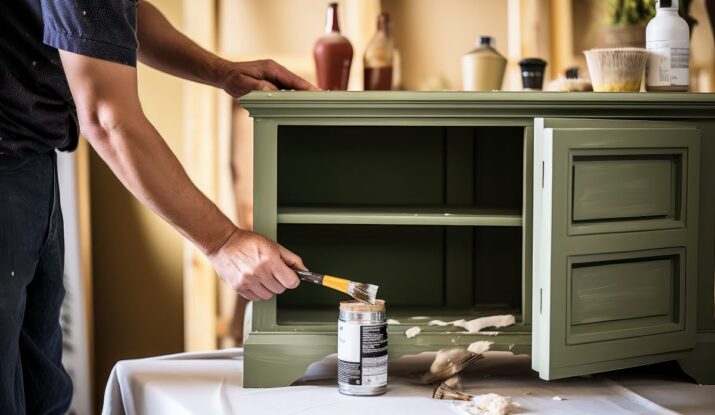
Many homeowners wonder, can you use cabinet paint on walls to achieve a sturdier, longer-lasting finish? The solution is yes, but it’s not the most cost-effective or best looking option for your drywall. Although thfese enamels are very tough they are made to work on hardwood and not a plaster surface that is flexible.
This article breaks down the chemistry differences, the high cost, and the application nightmares you might face. We also cover safety tips and better ways to utilize those expensive leftovers so you can make the right decision for your home.
Cabinet Paint vs. Wall Paint
In order to know how risky it is, you need to know the difference. The use of cabinet paints and wall paints is of a totally different kind. Wall paint (typically latex or acrylic) is meant to be elastic. The seasons cause drywall to enlarge and shrink. The paint moves with it. It is also formulated to be breathable, letting moisture escape from the structure.
Cabinet paint (often urethane, alkyd, or oil-based paints) is designed to be rigid. It cures into an extremely hard shell. Such toughness does not allow scratches by fingernails and damage by grease.
Key Differences at a Glance
This is a breakdown of why they are different.
| Feature | Standard Wall Paint | Professional Cabinet Paint |
| Hardness | Low (Flexible) | High (Rigid Shell) |
| Cost | $40 – $60 per gallon | $80 – $120 per gallon |
| Leveling | Low (Holds texture) | High (Smooths out) |
| Sheen | Flat, Matte, Eggshell | Satin, Semi-Gloss, Gloss |
| Drying Time | Fast (1-2 Hours) | Slow (needs to cure) |
If you use a rigid enamel on a large, flexible wall, it might crack over time. Conversely, painting walls with this thick product is physically difficult.
The Cost Factor
Money is the biggest reason to pause. Can you use cabinet paint on walls to save a few bucks? Usually, no.
Cabinet paint is significantly more expensive. It contains specialized resins to create a smooth finish. Using a $100 gallon of paint on a hallway is overkill.
Wall paints provide excellent coverage for a fraction of the price. Unless you are painting a small bathroom or a backsplash, the cost outweighs the benefit.

Texture and Imperfections.
Perfect kitchen walls are uncommon. They are bumpy, tapped, and poppy nails. These imperfections are concealed with the help of standard wall paint, particularly matte or eggshell finish. The low sheen absorbs light. It renders the wall to be flat and uniform. Normally cabinet paints are available in satin, semi gloss or in high gloss. These sheens reflect light. They are designed to highlight the smooth surface of wood.
If you roll this onto raw drywall, it will act like a spotlight. Every dent, scratch, and roller mark will stand out. The shine will make your room look busy and uneven. To pull this off, your surface preparation must be flawless. You would need to skim coat the entire wall first.
Problems in Application
Kitchen cabinets are normally painted through a sprayer. This prevents the presence of brushwork and gives the appearance of glass. Walls are normally painted using a roller. The cabinet coat products are sticky and thick. They are “self-leveling,” meaning they try to flow out flat before drying.
On a vertical wall, this can cause sagging. If you apply it too heavily, it will drip. If you overwork it with a roller, you will ruin the leveling agents.
Regular paint is forgiving. You can roll it back and forth. Enamel paint starts to set up quickly. If you roll back over a tacky area, you will pull up the texture. It becomes a nightmare to get a smooth result on large areas.
Touch-Up Nightmares
Imagine your kids scuff the hallway wall two years from now. With standard latex, you grab the can and touch it up. It usually blends in well. With cabinet paints, touch-ups are nearly impossible. The enamel cures and changes color slightly over time due to oxidation. The sheen also changes as it hardens.
If you try to touch up a spot in the middle of the wall, it will flash. You will see a shiny patch that never quite matches the rest. You often end up having to repaint the entire wall corner to corner.

The Exception: When We Recommend It
There are times when the answer to “can you use cabinet paint on walls” is yes.
High-Moisture Zones
In a small bathroom or laundry room, moisture is a killer. Oil based or hybrid enamels resist water better than standard latex. If you lack good ventilation, the durable nature of cabinet enamel helps. It creates a barrier against steam and mildew.
Wainscoting and Trim matches
One thing that is currently popular is the same-colour baseboards and walls. Where there is wood paneling or beadboard below half the wall, the cabinet paint will be used.
Wood moves differently than drywall. It needs that hard, washable finish. Using enamel here protects the wood from shoe scuffs and vacuum cleaners. It makes easy cleaning a reality.
The “Backsplash” Wall
The area behind your stove gets greasy. Painting this small section with durable finish enamel makes sense. You can wipe grease right off without scrubbing away the paint. It acts almost like a tile surface.
The Fatal Mistake: Wall Paint on Cabinets
We must address the reverse scenario. This is where most companies see homeowners fail.
You can put cabinet paint on walls. But you can NEVER put wall paint on cabinets.
We see this tragedy often. A homeowner buys a bucket of “Premium Wall & Trim Paint” and puts it on cabinet doors.
- The Sticky Factor: Latex never cures hard. It stays rubbery. Your doors will stick to the frames.
- Peeling: Hand oils dissolve latex. The paint will peel off around the handles within months.
- Grain Raising: Water-based wall paints soak into oak cabinets. They raise the grain, making the wood feel rough.
At Dr. Cabinet, we use special paint you cannot buy at big-box stores. We use catalyzed finishes that resist chemicals and impact. Do not try to save money by using the wrong product on your furniture.

Step-by-Step: If You Decide to Proceed
You have the paint. You accept the risks. You want to use that semi gloss enamel on your bathroom walls. Here is how to do it correctly.
1. Extreme Prep
You cannot skip this. Sand the walls smooth. Since the paint sheen is high, any bump will show. You must fill every hole and sand it flush.
2. The Right Primer
If going over old latex, you need a bonding primer. Some enamels will not stick to standard latex well. A high-quality primer ensures the new paint grabs the surface.
3. Watch the Weather
These paints do not withstand heat and humidity. In case it is hot, the paint becomes dry too quick. This leaves deep brush marks. It can never dry out correctly, in case it is too humid.
Workplace Health and Safety: The Unseen Factor.
Cabinet paints and specialized enamel products are stronger. They contain chemicals designed to bite into wood and laminate. These chemicals off-gas for days.
Ventilation is Mandatory
If you paint a large wall with oil-enriched enamel, the fumes will be overpowering. This can easily trigger headaches or make you feel dizzy.
- Open Windows: You need cross-ventilation.
- Wear a Mask: An easy dust mask is not sufficient. You also require a respirator of organic vapors.
- Isolate the Area: Separate the kids and pets until a cure is provided.
Painters are professionals who are aware of how to deal with such fumes. To a homeowner who is a DIY person it can be dangerous to paint walls using industrial products.
The Cleanup Struggle
Cleanup is another massive difference.
When you use regular paint you clean your roller and brush in the sink. Warm water and soap do the job. It enables one to clean up more easily after a hard day.
With cabinet paint, water often won’t work. Even water-borne alkyds are sticky and stubborn. True oil based products require mineral spirits or paint thinner.
- Ruined Tools: You might have to throw away your roller covers. They are hard to clean perfectly.
- Messy Sinks: Do not wash these down your drain. The resins can clog your plumbing.
- Skin Contact: It is hard to scrub off your hands.
So, can you use cabinet paint on walls without making a mess? Only if you are extremely careful.
Other Ways of Using Left Over Paint
And you have that half-gallon of you. You don’t want to waste it. Where to, otherwise than the walls?
Trim and Baseboards: This is the best use. Baseboards take abuse from vacuums and shoes. The durability of cabinet coat is perfect here.
Doors and Frames: Interior doors get touched constantly. Hand oils ruin flat paint. Using a satin or semi gloss cabinet enamel makes wiping fingerprints easy.
Furniture: Have an old dresser or nightstand? This paint is made for furniture. It will create a smooth finish that looks store-bought.

Why Dr. Cabinet is the Authority
At Dr. Cabinet, we know exactly which product belongs on which surface. We never guess.
Homeowners often ask us, “Can you use cabinet paint on walls to match my kitchen?” We advise against it for large areas. Rather, we paint the cabinets the same color as a good wall paint. This is able to provide you with the unified appearance you desire without the technical problem.
We understand sheen and texture. We know that high gloss looks cheap on a living room wall.
We serve clients across the nation. From government buildings to luxury condos, we deliver the best paint results. We respect the drying time and the prep work.
If you messed up a DIY job, call us. We fix peeling cabinets and streaky walls. We restore the beauty of your space.
FAQs
Q: Can you use cabinet paint on walls in a bedroom?
A: We do not recommend it. The finish is too shiny and hard for a cozy space. Plus, the fumes during drying can linger, making it unsafe to sleep there for days.
Q: Will cabinet paint stick to my bathroom ceiling?
A: Yes, but gravity is your enemy. These paints are heavy and sag easily. Painting a ceiling overhead with heavy enamel is very messy and physically difficult to do well.
Q: Can I just use regular paint on my kitchen cabinets to save money?
A: Painting cabinets needs resistant enamel to block stains. For cabinetry, regular paint fails. Painting kitchen cabinets with the right stuff protects them for years!
Q: Is oil-based paint still the top choice for painting kitchen cabinets?
A: Hybrids offer easier cleanup! When applied correctly, you get a hard satin finish. It is the safest choice for any kitchen cabinet painting project today.
Q: What is the best paint for walls if I want them to match my cabinets?
A: Use the same type for other surfaces. Just prime, wait, and do proper prep. Make an informed decision for your project; most surfaces don’t need heavy enamel.
Conclusion:
So, can you use cabinet paint on walls successfully? Yes, if you have the skill and patience. But for most people, it is unnecessary work. Cabinet paints are expensive tools designed for a specific job. They protect wood from grease and impact. Using them on drywall is often a waste of money and effort.
Allow the walls to get a breathable but flexible coating that is intended to be used in drywall. Do not paint over your kitchen cabinets, in case they are worn out. Call Dr. Cabinet. We are the professional touch that can be added to your home.