

Cabinet hinges look small. But the wrong pick throws off an entire door. Types of cabinet hinges vary by cabinet build, door overlay, and finish. Pick the wrong style and doors sag, bind, or refuse to close.
Dr. Cabinet repairs all types of cabinet doors. They fit hinges for framed and frameless boxes alike. This guide breaks down each hinge style with a real job example. You get two comparison tables and a clear buying checklist.
Quick Answer
Concealed European hinges suit most frameless cabinets today. Exposed and semi-concealed hinges fit older, framed cabinets. Match the hinge to your door overlay and cabinet frame. And have desired look before you order parts.
Not sure which hinge fits your cabinet? Call Dr. Cabinet at 201-212-5477 for a fast match.
Why Cabinet Hinge Selection Matters
The door will weigh on the hinge when it is opened and closed. The incorrect style causes screws to become over-tightened, cracks wood and reduces the life of the door. You don’t have to run back to the store again if you know the key types of cabinet hinges.
Framed vs. Frameless Cabinet Construction
The framed cabinet is a type of cabinet. It has a frame around the opening of the box. Frameless cabinets bypass the frame. They replace the sides of the cabinet with doors. This distinction matters. It influences cabinet construction and hinge choice.
- Framed cabinets often use semi-concealed or surface mount hinges.
- European hinges are hidden on frameless cabinets.
- Mixing styles on one box causes gaps and uneven doors.
How Door Overlay Style Changes Your Hinge Choice
The door overlay style indicates the amount of coverage provided by the door over the opening in the cabinet. The cabinet opening and almost the whole hinge is covered by full overlay doors. Partial overlay doors cover part of the frame and leave a gap. The inset doors sit flush in the frame wing, at the level of the wood.
Types of Cabinet Hinges by Visibility
Types of cabinet hinges split into groups. It’s based on what you see once the door shuts. Continuous traditional hinges run the full height of the door wing to distribute weight evenly.
Concealed European Hinges
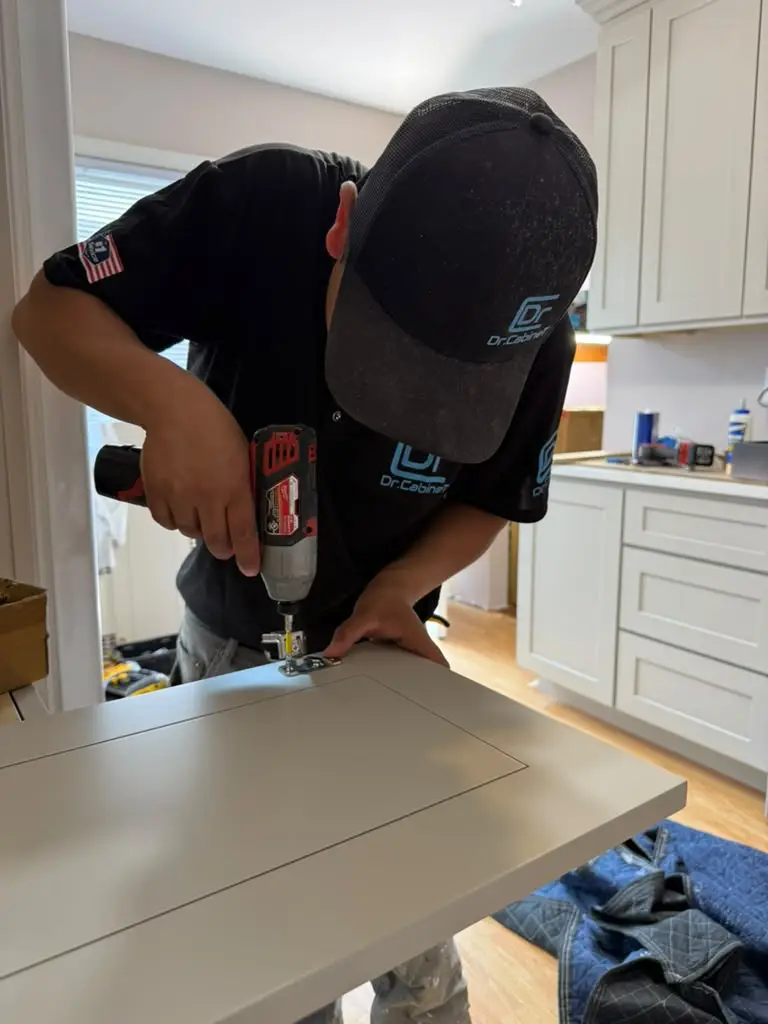
European and concealed hinges hide inside the cabinet when the door closes. They mount to a cup drilled into the door and a plate inside the box. Concealed hinges offer three-way adjustment for a tight fit.
- Best for frameless cabinets and modern kitchens
- Common on full overlay and partial overlay doors
- Support a soft-close mechanism in many models
Semi-Concealed Hinges
Semi-concealed hinges show part of the hinge. When the door shuts. Traditional semi-concealed hinges bridge framed cabinets and classic door styles. You still see the hinge knuckle on the door face.
Exposed Hinges
Exposed hinges remain visible all the time the door is closed. They make traditional cabinets and farmhouse kitchens look interesting in a traditional form. Decorative finishes make a whole hinge that is visible into a cabinet design feature.
Surface Mount Hinges
Surface mount hinges mount on the outside of the cabinet. Butterfly hinges are a common decorative example. These fit fine on face frame cabinets of simple construction and shallow build.
The following table compares the four visibility groups.
| Hinge Group | Visibility | Best Cabinet Type | Common Feature |
| Concealed European | Hidden | Frameless | Three-way adjustment |
| Semi-concealed | Partly visible | Framed | Bridges old and new styles |
| Exposed | Fully visible | Traditional | Decorative finish options |
| Surface mount | Fully visible | Face frame | Simple, shallow install |
Cabinet Doors and Overlay Hinge Options
Cabinet doors need a hinge. It must match their overlay, not just their look. These types of cabinet hinges depend on overlay depth more than door color or finish.
Overlay hinges are based on the overlay depth, cup size, and mounting plate. Most doors require cabinet door hinges that open to 105° to 180°, depending on the cabinet type.
Full Overlay Hinges Explained
Full overlay hinges suit doors. They cover the entire cabinet opening. The door edge sits close to its neighbor with a slim gap. Butterfly hinges don’t use cups. For European hinges, what changes by overlay is the arm shape (the crank), not the cup depth.
Partial Overlay Hinges
Partial overlay hinges fit doors that cover part of the frame. A visible strip of the front frame stays exposed. This style works well on older face frame cabinets.
Inset Hinges for Furniture-Style Doors
Inset flush hinges are designed to keep the door flat against the cabinet opening’s inside surface. The gap needs to be precise on all sides for inset cabinet doors. Either butt hinges or specialty inset hinges will do the job.
Cabinet Hinge Types by Mechanism and Hinge Styles
Cabinet door hinge types differ by how the hinge pin and plates move, not only by overlay. These are the types of cabinet hinges that determine the angle of swing, support, and motion.
Demountable hinges are easy to remove, without unscrewing. In the case of mortised hinges, the cabinet is recessed.
Butt, Wrap-Around, and Pivot Hinges
Butt hinges are the ordinary type of entire hinge visible that consist of two plates held together by a pin. Extra strength, with wrap hinges around edge of the door. Wrap-around hinges are used to support large or heavy doors. The top and bottom corners of the door have pivot hinges.
- Butt hinges: classic look, moderate support
- Wrap-around hinges: strong support for heavy doors
- Pivot hinges: no visible side hardware
Decorative and Specialty Hinges
Decorative hinges add style through finish, shape, or an exposed pin. Piano hinges and knife hinges fall into this specialty group. Corner cabinet hinges open wider to clear tight corners.
How the Soft-Close Mechanism Works
A soft-close mechanism ensures the door slows down in the last few inches to ensure a safe closing. It is commonly used in modern European hinges. The door closes without slamming against the door frame.
When Self-Closing Hinges Make Sense
Self-closing hinges close the door when it gets near to the frame. The self-closing mechanism is suitable for hectic kitchen spaces where children are running around. Combine self-closing hinges with a soft-close feature for a quiet closing.
How to Identify Old Hinges Before You Reorder
Old hinges hide clues about your cabinet build and the parts you need next. Matching types of cabinet hinges starts with the visible hardware already on your door.
Check Visibility and Measure the Overlay
Open the door and check how much hinge you can see. Fully hidden hinges point to a concealed European style. Measure how far the door overlaps the frame or box side.
- Fully hidden: concealed European hinge
- Partly visible: semi-concealed hinge
- Fully visible: exposed or surface mount hinge
Real Job Example: Matching Decorative Hinges in a Mixed Kitchen
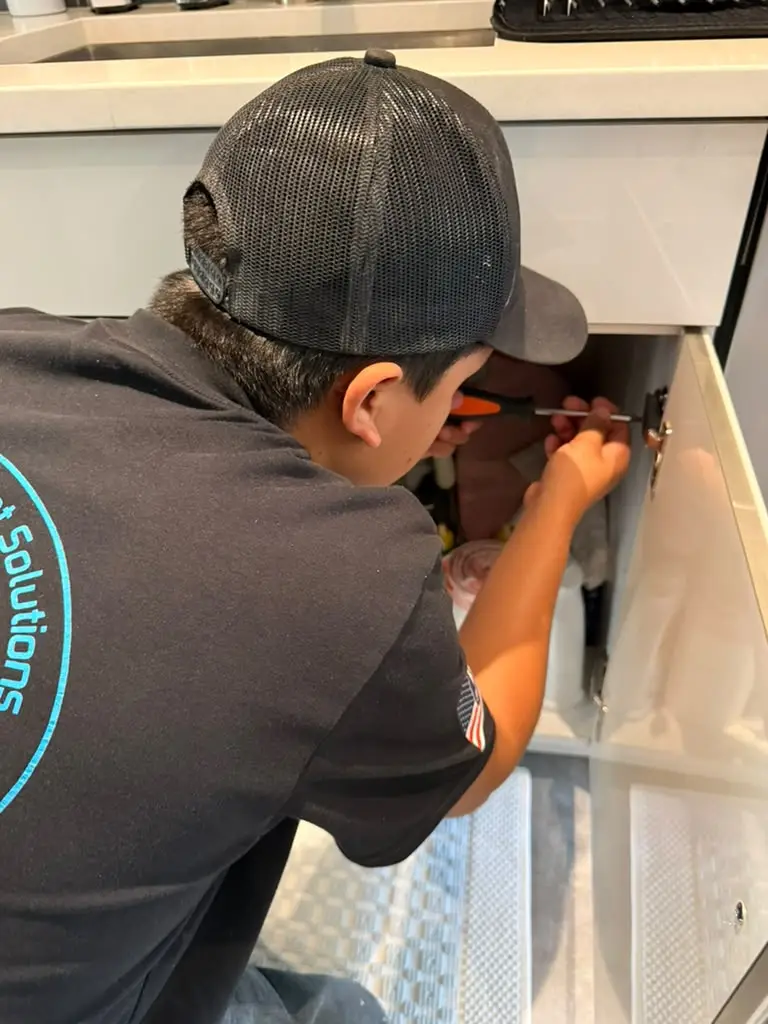
A client called Dr. Cabinet after a cabinet remodel left two hinge styles on one wall. The old cabinets used semi-concealed hinges on a face frame box. The new run used frameless boxes with concealed European hinges.
Our tech matched each door to its cabinet frame type. He swapped worn semi-concealed hinges for a matching new set.
No two styles will ever blend on one kitchen without you choosing to work it out, so try to match the frame first of all. All the cabinet repair work, from measuring to reinstallation – finished in less than an hour.
Dr. Cabinet Advice
“Never guess a hinge by memory alone. Bring the old hinge, or a clear photo, to the store. Measure the door overlay before you order. A wrong cup size means a second trip.”
Ready to match your cabinet hinges the right way? Call Dr. Cabinet at 201-212-5477 right now.
Choosing the Right Hinge for Your Cabinet Project
Fit the hinge with the cabinet frame and door overlay and desired style. Before ordering, check out the different types of cabinet hinges. A misaligned hinge mechanism results in door gaps, sagging doors, and multiple shopping trips.
The following table lines up cost, install effort and adjustment range across common styles.
| Hinge Type | Install Effort | Adjustment Range | Typical Cost |
| Concealed European | Moderate, cup drilling | Three-way | Mid-range |
| Semi-concealed | Simple, screw-on | Limited | Budget-friendly |
| Exposed | Simple, screw-on | None to minimal | Varies by finish |
| Surface mount | Simple, no drilling | Minimal | Budget-friendly |
Checklist Before You Order
Before purchasing, make sure these things are confirmed:
- Framed or frameless cabinet construction
- Find full overlay, partial overlay or inset cabinet door style.
- Desired look is hidden, partially hidden, or fully visible.
- Soft-close or standard closing action
- Door weight and size
When ordering any parts, please call Dr. Cabinet at 201-212-5477 for a professional check prior to ordering.
FAQs
Q: How do I identify my cabinet hinges?
A: Open the cabinet door fully and check how much hinge shows. Hidden hinges point toward a concealed European-style hinge choice.
Q: Which type of hinges are best for kitchen cabinets?
A: Most modern kitchens today will have a concealed European hinge. They are concealed from sight and provide a quiet, non-noisy soft-close hinge operation.
Q: How do I figure out what type of hinge I need?
A: Make sure that you check the type of cabinet frames and the cabinet door overlay first. Then match the hinge visibility to your desired final kitchen look.
Q: How do you tell what type of cabinet hinges you have?
A: Pay close attention to the cabinet door closing, when it is closed. Fully hidden means concealed, and visible means exposed or flush-mounted.
Q: What are the three types of hinges by visibility?
A: Concealed, semi-concealed, and exposed cover the three main types of cabinet hinges. Each fits a different cabinet style.
Q: What are the different types of hinges used in old cabinets?
A: Older cabinets often use butt hinges or semi-concealed hinges. These styles can be used in standard face frame cabinetry construction.
Q: Are all cabinets 24 inches deep?
A: No, base cabinets run about 24 inches deep on average, with a central barrel. Wall cabinets stay much shallower. They’re closer to only 12 inches deep.
Q: What way should cabinet doors open?
A: Cabinet doors should swing away from busy foot traffic paths. Plan the swing direction before you pick a hinge placement.
Q: What are inside hinges called?
A: Inside hinges are called concealed hinges or cup hinges. Usually, they attach to the inner surface of the cabinet box, and are not visible.
Q: How to install inside hinges on cabinets?
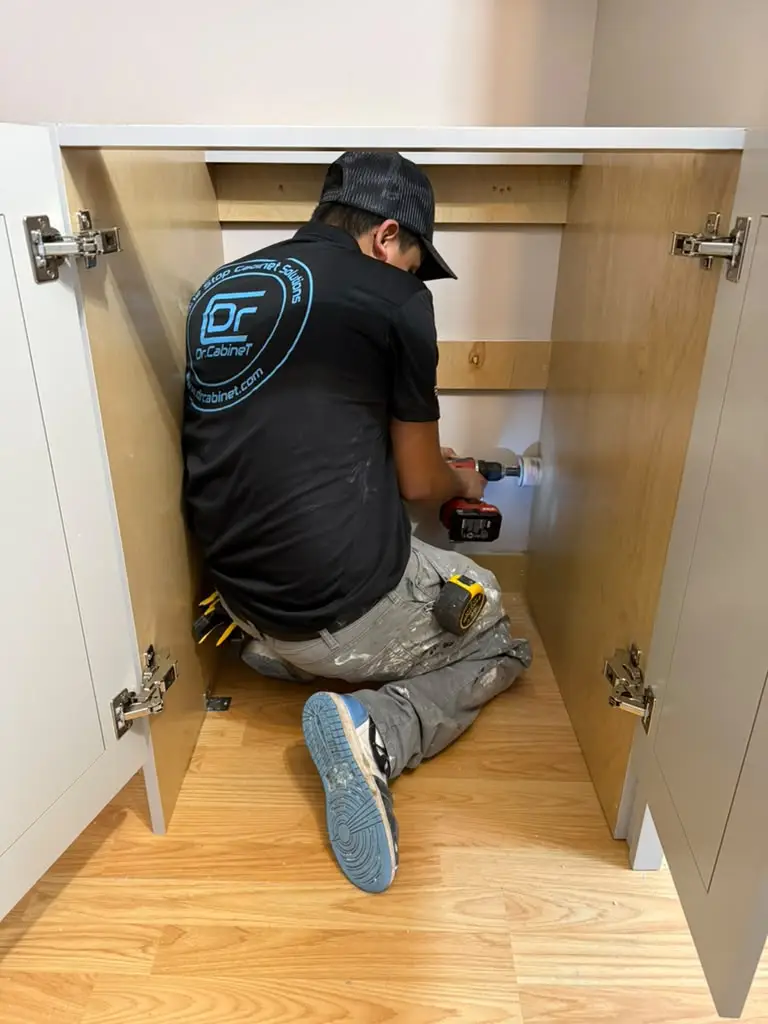
A: Drill a cup hole in the cabinet door at the marked spot. Screw the mounting style plate inside the box, then attach the cabinet door.
Conclusion
Types of cabinet hinges break down by visibility and overlay. And it’s mechanism, not looks alone. Before buying cabinet parts, determine the type of cabinet frame and door style. Concealed hinges suit frameless boxes, while exposed styles fit traditional builds.
Getting this right the first time saves a return trip to the store. We repair all types of cabinet doors and install the right cabinet hinge for your build. Choosing cabinet hinges matched by real field experience.
Our team checks overlay, frame type, and aesthetic appeal. We also check door weight on site. Skip the guesswork on your next cabinet project.
Need your cabinet hinges matched right the first time? Call Dr. Cabinet at 201-212-5477 today.