
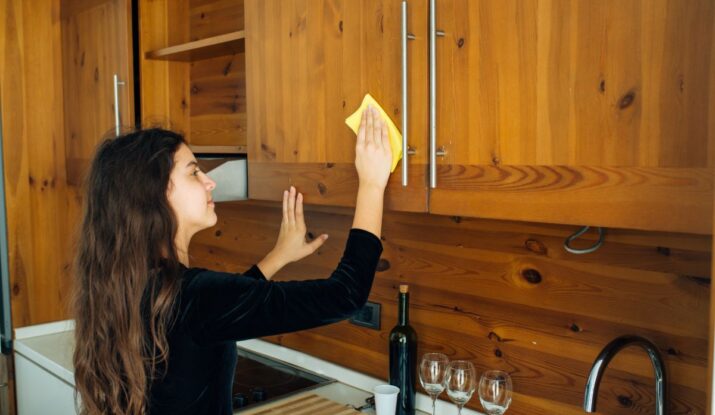
Let’s be honest. Faded cabinets can drag down your whole kitchen. That beautiful, warm wood you picked out years ago now just looks… tired. It makes the room feel older, a little dull, and honestly, it can be a real bummer.
But here’s the good news: you don’t need to live with it, and you definitely don’t need to spend a fortune on a full kitchen tear-out. Learning how to fix faded kitchen cabinets is totally doable.
This guide is your roadmap. We’ll walk through all your options, from a simple wipe-down with products like Restor-A-Finish and Feed-N-Wax, to a full DIY refinishing job, and even professional cabinet refacing. There’s a solution for every budget and skill level.
And if you get to the end thinking how to fix faded kitchen cabinets and plan to hire a pro, we’ve got you covered there, too. The team at Dr. Cabinet is ready to step in and make your kitchen beautiful again.
Causes of Faded Cabinets and Wear:
Maintenance Tips More Routine
Here’s what’s really happening to your cabinets:
The Everyday Culprits:
- Sunlight – acts like a slow bleach, fading color day by day
- Cooking grease – creates a sticky film that traps dirt
- Steam and moisture – can cloud and damage the finish over time
- Dust and grime – act like fine sandpaper, scratching surfaces
- Spills and splatters – can stain or dull the protective coating
Wood vs. Laminate – How They Wear Differently:
- Real wood cabinets – the stain fades and protective coat wears thin, leaving wood looking dry
- Laminate cabinets – the plastic coating gets cloudy or scratched (color stays but surface dulls)
- Wood can be refinished and restored – laminate usually needs replacement when damaged
Routine maintenance is a huge difference. Uncomplicated tasks such as wiping grease and dirt, polishing occasionally, or having a wood conditioner keep the cabinets cleaner and keep them shiny a lot longer. By skipping these steps, the wear set in will be hard to remove later and the affected cabinets are more difficult to restore.
This basic maintenance takes minutes but adds years to your cabinet’s life! Missing routine maintenance will one day require you to discover how to fix faded kitchen cabinets in a more serious way.
How to Restore Kitchen Cabinets (DIY First Steps)
Clean Before Anything Else
Before you even think about stain or paint, you’ve got to start with a seriously good clean. Years of cooking grease, sticky fingerprints, and plain old dust won’t let anything stick on.
- Wear gloves, grab a bucket, and a solid gentle wood cleaner like Murphy’s Oil Soap.
- Use a soft sponge and really go to town.
- Wipe every single door and drawer front until that greasy film is completely gone.
This isn’t the fun part, but it’s the most important. Getting them truly clean is what gives you the best results later. It’s the difference between a professional-looking job and a flaky, peeling mess.

Light Sanding to Remove Minor Scratches and Dullness
Okay, cabinets are clean. Now what? Now you need to rough them up a bit. Think of that old, smooth finish like a piece of glass—nothing wants to stick to it. You don’t need power tools or muscle here. Just a sanding block and some fine-grit paper to lightly scuff the entire wood surface. You’re not trying to remove the stain, just knock down the shine. You’ll be amazed—this light sanding alone makes those minor scratches practically vanish and gets rid of the overall dullness.
For corners or really tough faded spots, a pad of super fine steel wool gives you more control. It’s a simple step, but it makes your cabinets ready for their beautiful new look.
Faded Cabinet Solutions You Can Try at Home
Polishing and Sealing Cabinets with Oils and Waxes
Sometimes your wood just needs a good meal. When cabinets look dry and thirsty, they lose their luster. That’s where wood oils and waxes come in.
- Howard Feed-N-Wax is a favorite for this. Its orange oil formula sinks into the wood to condition the inside out.
- Consider it skin lotion. A nice polishing oil replaces lost moisture and restores a healthy shine.
- The wax component then captures that goodness into it, forming a protective coating that prevents subsequent drying and fading. It is just a simple wipe-on, leave it to soak, buff it off and a big difference is made.
Using Restor-A-Finish to Revive Wood
For cabinets that have lost their color but don’t need a full sanding, this stuff is practically magic. Howard’s Restor-A-Finish is a real game-changer.
- It comes in 9 color options, so you can find a perfect match to blend away sun fade and hide blemishes and white rings.
- You simply use with a soft cloth–or super fine steel wool on the rougher areas–gently rubbing it in. Allow some time and then wipe away the excess using a clean rag.
- There’s no heavy stripping or sanding. It works by softening the existing finish just enough to allow the pigments to blend in and restore the original color and beauty.
Applying Gel Stain for Cabinets
When a simple polish isn’t enough, but you want to avoid the mess of stripping everything, gel stain is your best friend. It is often recommended in guides on how to fix faded kitchen cabinets because it’s thicker than liquid stain and much easier to control.
- The beauty of gel stain for cabinets is that it can be applied right over an existing finish. All the preparation it needs is a light sanding to make it stick.
- You are literally giving the wood a fresh coat of paint that penetrates the pores of the wood, giving the wood a new appearance altogether. It’s perfect for giving dated oak a modern, darker stain without a nightmare project.
- This single new coat can totally transform the appearance of your kitchen, making old, tired cabinets look rich and new again.

Repaint Faded Wood Cabinets for a New Finish
When your cabinets have seen better days, nothing works quite like a fresh coat of paint. It’s the ultimate kitchen refresh – covering up years of wear and giving you what feels like brand new cabinets.
Your Game Plan for a Flawless Finish
Getting this right means following the steps. Skip one, and you’ll notice. Follow them all, and you’ll be amazed.
- Start with the right primer: This isn’t regular primer. You need a bonding primer that really grips the surface. It creates the perfect foundation that keeps your paint from chipping later.
- Apply the paint with care: No haste now. With corners use a brush and on flat surfaces use a small roller. Thin coats are more efficient than thick. Allow the first layer to dry first before applying another layer.
- Protect your work: Once the final coat is dry, add a clear protective finish. This is what keeps your beautiful new paint job from getting scratched up when life happens in the kitchen.
Gathering Your Gear
You’ll need just a few key items to get started:
- The right paint: Get paint made specifically for cabinets or trim. It’s tougher than wall paint and will hold up much better.
- Good tools: An angled brush and small foam roller will give you the cleanest look without brush marks.
- The basics: Don’t forget gloves to keep your hands clean and drop cloths to protect everything around you.
The Power of Paint
Here’s the best part – this works on both wood and laminate cabinets. With a new paint job your kitchen will have a whole new feel. It makes the entire area look cleaner, brighter and more of the kitchen you really want to spend your time in.
Cabinet Stain and Varnish Repair Tips
Think of this final step as putting a clear, durable shield on your cabinets. That’s exactly what a protective topcoat like polyurethane does – it locks in all your hard work and keeps your cabinets looking great.
Why This Final Step Matters
- Acts like invisible armor against kitchen messes
- Fights off water rings, sticky fingerprints, and minor scratches
- Blocks sunlight to prevent colors from washing out
- Keeps that beautiful glossy look lasting longer
- Makes cleanup simple – just wipe and go
Getting the Application Right
- Pick water-based polyurethane – it’s easier to work with
- Use smooth brush strokes, following the wood’s pattern
- Two thin layers work better than one thick, messy coat
- Be patient – let the first layer dry completely before adding another
- Gently sand between coats for that perfectly smooth feel
This last step could look insignificant, but that is what will make your DIY project look professional and withstand every day life. No hurry–that additional care will really be seen in the finished product!

Professional Cabinet Refinishing vs DIY
Wondering whether to attempt doing your own cabinets or to employ someone? Let’s break it down simply. Both methods may assist you in discovering how to fix faded kitchen cabinets but they provide alternative routes towards achieving optimal outcomes in your space.
Do It Yourself If:
- You want to save on cost and don’t mind investing your time
- You enjoy hands-on project work and have free weekends
- You don’t mind a little mess while completing the work
- Your wood cabinets just need a simple update rather than major cabinet refacing
Hire a Pro If:
- You want it done fast (often 1-2 days for the entire kitchen!)
- You want guaranteed quality with a durable new finish that lasts
- You want to maintain your schedule without the DIY stress
- You need faded cabinet solutions that professionals can execute perfectly
The Simple Truth:
Professional refinishing can save you time and deliver a durable, high-quality finish. If your cabinets need expert attention, Dr. Cabinet offers a professional kitchen cabinet repair service to help restore their appearance and functionality.
You will end up with beautiful restored cabinets that will make your kitchen look new again in any case. It is simply a matter of getting there!
| Consideration | DIY Approach | Professional Service |
| Cost | Lower upfront cost for materials only | Higher initial investment, but includes labor and expertise |
| Time | Several weekends to complete | Usually 1-3 days for the entire project |
| Quality | Depends on your skill level; may show brush marks or uneven coverage | Factory-like finish with professional spraying equipment |
| Convenience | Work around your schedule, but deals with ongoing mess | Minimal disruption; we handle everything from prep to cleanup |
| Durability | Store-grade materials may need touch-ups sooner | Commercial-grade finishes that last years longer |
| Best For | Simple refreshes, tight budgets, hands-on homeowners | Complex projects, busy households, guaranteed results |
Cabinet Refacing Options for a Budget-Friendly Update
Want a brand-new kitchen look without the giant price tag? Cabinet refacing might be your perfect solution. It’s also one of the approaches often mentioned when people search how to fix faded kitchen cabinets on a budget.
Here’s the basic idea: we keep your existing cabinet boxes (the structure) and give them a complete makeover with new doors, drawer fronts, and fresh exterior finishes. It’s like getting custom cabinets without the custom cost.
Why Homeowners Love Refacing:
- It’s typically the cheapest path to a fully transformed kitchen
- You get to choose from dozens of new doors and hardware styles
- The whole project usually takes just 2-4 days from start to finish
- You can completely change your kitchen’s style without the mess of full demolition
Think of refacing as the smart middle ground between a simple paint job and a full gut job. You get that “wow” factor for your house without the “wow, that’s expensive” feeling.
How to do Kitchen Cabinet Refinishing Without Replacing Them
Not ready for a major project? These are just some of the easy ways to give your kitchen a serious update. All it takes to learn how to update kitchen cabinets without replacing them is to work with what you have.
Quick Wins for Instant Impact:
- Swap out old hardware: New pulls and knobs make a bigger difference than you’d think
- Give them a good deep clean – you’ll be shocked at how much grime has built up
- Add stick-on lighting inside for both function and atmosphere
- Use contact paper or peel-and-stick wallpaper on the interior back panels
These suggestions are excellent in kitchens and bathrooms. It can be so easy to change the tiniest details – such as replacing those old-fashioned brass handles with new black hardware – and everything will feel new.

Maintenance Tips to Protect Cabinets from Fading
Want to know how to make old cabinets look new? Regular care with the right supplies is much easier than fixing damage later. Here’s practical advice on how to protect cabinets from fading and keep them beautiful for years.
Simple Habits for Long-Term Beauty:
- Wipe them down weekly with a soft cloth – just water usually does the trick
- Pull shades during peak sun hours to prevent UV damage
- Clean up spills immediately so moisture doesn’t soak in
- Use felt pads under anything that sits on your cabinets regularly
- Reapply wood conditioner every 6-12 months to preserve the surface
Good maintenance isn’t complicated – it’s just about being consistent with these simple steps. These tips are also key if you’re serious about how to fix faded kitchen cabinets and keep them from wearing out again.
FAQs About How to Fix Faded Kitchen Cabinets
Can faded laminate cabinets be restored?
Yes, but differently than wood. You can’t stain laminate, but thorough cleaning and a fresh coat of paint designed for laminate surfaces can work wonders. For badly damaged laminate, refacing is often your best bet.
What’s the cheapest way to update faded cabinets?
Definitely a good cleaning with a restoring substance such as Howard Restor-A-Finish or Feed-N-Wax. It almost sells for $30 and with an afternoon’s work, you can bring back a surprising amount of color and shine.
Is Restor-A-Finish better than painting?
It depends! Restor-A-Finish is perfect for reviving the existing wood grain and color when the damage is minor. Painting is better when you want a completely new color or when the current finish is too far gone to save.
How long does professional refinishing last?
With proper care, a professional refinishing job should last 8-15 years. We use commercial-grade finishes that are much more durable than anything you can buy at the hardware store.
How often should I apply Feed-N-Wax to wood cabinets?
For cabinets in good condition, every 6-12 months is perfect. If your wood is looking really dry or you’re in a dry climate, every 3-4 months might be better. You’ll know it’s time when the wood starts looking thirsty again.
Conclusion: Choosing the Right Way to Fix Faded Cabinets
So there you have it – from simple weekend projects to full professional makeovers. You can either pick up a bottle of Restor-A-Finish, or you can hire the professionals to do it, but you have lots of choices on how to fix faded kitchen cabinets. The option you take is actually dependent on your budget, your time and the amount of work you wish to do on your part.
It is important to remember that staying abreast with routine care is the key. A few swipes here and there, some conditioner there – these minor things will breathe new life into your cabinets.
But if you’re looking at your kitchen and feeling overwhelmed, we understand. Dr. Cabinet provides professional cabinet refinishing and refacing services to help restore your cabinets. Our kitchen cabinet repair service can help you explore the right solution for your kitchen. Ready to refresh your cabinets? Contact Dr. Cabinet today to discuss your project!