
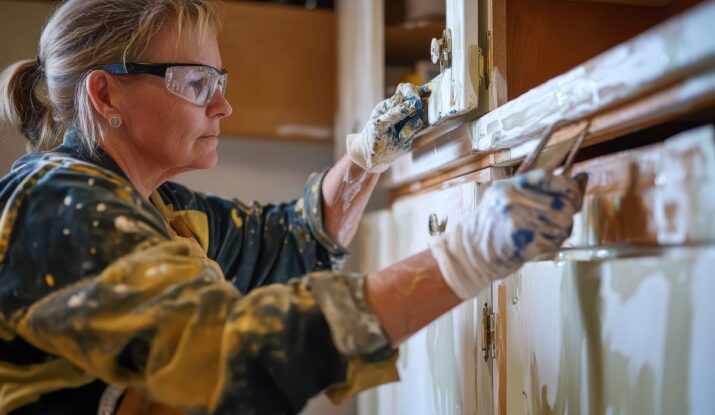
Noticed a weird bubble or a rough, lifted edge on your kitchen cabinet? That’s probably cabinet veneer peeling. It happens all the time, especially in kitchen or bathroom that see a lot of steam. See, veneer is just a thin sheet of nice wood or laminate glued onto a core material—often particle board. When that glue fails from heat or moisture, the veneer starts to pull away. The good news? You can usually fix peeling veneer yourself. You won’t need to replace the entire thing if you use the right adhesive to make the veneer stick firmly again. This guide covers everything, from a quick glue job to putting on a brand new piece of veneer.
What Causes Cabinet Veneer Peeling?
The trick to a good repair is to figure out the reason why your veneer is failing. It narrows down to a handful of habitual villains:
- Moisture & Humidity: The one that counts. Cooking or shower vapor penetrates beneath the veneer, weakening the glue until it releases.
- Heat: Oven heat or even direct sunlight can bake the adhesive thus making it brittle and will fail.
- Water Damage: Instances where liquid is not wiped up promptly can cause infiltration of water which swells the underlying wood (usually particle board) pushing the veneer off.
- Age: Sometimes the adhesive simply dries up and then gives out over time particularly in older furnishings and cabinets.
- Physical Damage: a sharp blow may split the veneer, and since the cabinet veneer peeling process may start in that point of weakness.

Assessing the Damage: Can You Fix Peeling Veneer?
First things first – let’s see what we’re working with. Take a close look at your cabinets and ask yourself: is this a simple fix or something more involved?
Minor Repairs (you can probably handle this yourself):
- The veneer is lifting but still in one piece
- You can gently lift it without it cracking
- There are just small bubbles or loose edges
- No pieces are missing veneer
This is like a simple bandage situation – some glue and pressure should do the trick.
For more major repairs (might need some extra help):
- Large sections of veneer are missing or broken
- The damage is splintered or chipping away
- The underlying particle board is swollen or damaged
- You’re dealing with delicate vintage furniture
Here’s a professional tip: if you’re working with older furniture, proceed with caution. Vintage veneer can be incredibly thin and fragile – sometimes it’s better to call in a expert rather than risk making it worse.
How to Fix Damaged Veneer: A Step-by-Step Repair Guide
The cabinet veneer peeling is a DIY project that can be fixed easily. The idea is to fix the loosely fixed layer back and make it look and feel smooth and seamless.
Tools & Materials You’ll Need:
- Adhesive: Small areas of wood veneer with wood glue; large, flat, or laminate with contact cement.
- A heat gun or a hair dryer to relax old adhesive.
- A putty knife or scraper.
- Clamps or heavy weights.
- Sandpaper to use on a small scale.
- Patching holes with Wood filler or Bondo.
- Wiping with alcohol or hard liquor.
- A small brush and toothpicks.
Step 1: Preparation is Key
Start with removing any pieces of chipping veneer. In case the veneer is already peeling but lingering, then make sure to apply a heat gun on low power mode so that the glue that is under the veneer is warmed and relaxed. Take the veneer up very carefully not to break it. After the loose veneer is peeled off, you have to clean up the exposed wood on the cabinet doors as well as the bottom of the veneer. Removing any old, dry glue, wipe with rubbing alcohol or mineral spirits to make a clean surface so the bond can be required.
Step 2: Applying the Adhesive
It is here that accuracy is important. In small surfaces, use sparingly wood glue. Spread the glue using a toothpick into all the crevices and cracks of the piece of wood that has been exposed. Contact cement is to be used in larger areas or laminate. Coat the substrate and the bottom of the veneer with a thin film of uniform thickness. When you are gluing the surfaces, contact cement should be totally dry and tacky. Always keep in mind that it attaches itself when in contact and thus it should be placed accurately!
Step 3: Securing the Veneer
When the adhesive is prepared, or assembled, then very carefully place the veneer on the wood underneath. Beginning in the middle and pushing to the edges, push to wring out all the air pockets. Make sure to roll or use fingers to make the contact even. To fix it on the dry side, use clamps to apply pressure there, or use a weight (such as a pile of books) to press against the adhesive. Until the adhesive is completely dry and fully hardened, leave everything as is.
Step 4: Blending the Repair
Once the glue has caved off the clamps. You will see some ridges or glue squeegee. Apply a putty knife to remove any dried glue blobs, and then a gentle sanding of the part that has been repaired will help to match it to the rest of the surface. In case of any gaps or holes, use a non-shrinking filler such as Bondo to fill it up.
When it is smooth, you can gel stain or paint the spot that had been repaired to blend with the rest of the cabinet and restore its original appearance. When you have a huge repair, you can have a new layer of paint all around the doors of the cabinets and make it look like it was all the same.

When to Replace the Veneer on Cabinet Doors
Let’s be real – sometimes, you open up a cabinet and just know it’s beyond a simple glue job. When the damage is really bad due to cabinet veneer peeling or the material underneath has seen better days, putting on a fresh piece of veneer might be your best bet.
Here’s when replacement makes sense:
- The damaged area is large or in a very visible spot
- The particle board underneath is swollen or crumbling
- The existing veneer is brittle and keeps breaking when you touch it
- You’ve tried repairing but it just doesn’t look right
The process is pretty straightforward:
- Use a heat gun to gently remove the old veneer
- Scrape off any stubborn adhesive residue
- Cut your new veneer slightly larger than the area needed
- Apply adhesive and carefully position the new piece
- Trim the edges once everything is dry
Pro tip: Take your time matching the grain pattern if you’re only doing a section. It’s worth visiting a few suppliers to find something that blends well. And remember – sometimes replacing the entire door makes more sense than spending hours on a tricky veneer patch job. If the cabinet surface needs a professional finish after repair, a cabinet refinishing service can help restore the appearance.
How to Prevent Cabinet Veneer Peeling
Want to avoid dealing with this problem again? A little prevention goes a long way. Here’s how to keep your cabinets in great shape:
Fight Moisture Daily
- Run your kitchen or bathroom exhaust fan during and after cooking or showers
- Wipe up spills and condensation immediately – don’t let water sit
- Use coasters under drinking glasses and trivets under hot dishes
- Consider a dehumidifier if your home tends to be humid
Make Inspection a Habit
- Every month or two, run your hand over cabinet surfaces
- Look for early warning signs like:
- Slight lifting at the edges
- Tiny bubbles you might not notice from afar
- Changes in texture or slight discoloration
- Address small issues right away – they only take minutes to fix
Simple Maintenance Tips
- Clean with a damp (not wet) cloth and mild soap
- Avoid harsh chemicals that can break down adhesives
- Immediately dry any areas that get wet
- Keep heat sources (like toasters) away from cabinet surfaces
Regular checkups and quick attention to small problems prevent major work later. Spending 30 seconds now spotting a loose edge could save you hours of repair work down the road. Your cabinets work hard for you – returning the favor with basic care keeps them looking their best for years.
What about the missing veneer?
Saw a part of the veneer missing? If a section of veneer has chipped off completely, don’t panic. You need a patch job.
First, clean up the area by using a sharp utility knife to neaten the edges of the hole, making it a simple geometric shape—a square or rectangle is easiest. Then, grab a sample of your new veneer, trace the shape you just created, and cut out a fresh patch. The real trick to making it disappear is twofold: get the fit as tight as possible, and take your time finding a new veneer that closely matches the grain pattern of your existing cabinets. A well-executed patch, once stained, can be incredibly difficult to spot.

FAQs About Cabinet Veneer Peeling
What's the best glue for this job?
For large areas, contact cement is fantastic because it creates an instant bond. But here's the technique - you need to apply it to both surfaces and wait until it's tacky. For example, when working with small loose pieces on solid plywood, regular wood glue gives you more working time.
Can I just paint over peeling veneer?
If you paint over veneer that's starting to flake or strip, you'll just create a bigger mess. The peeling continues underneath which will damge your new paint job with it. Always fix the peeling first. Sand it smooth, and make sure the surface is properly primed.
Why does veneer peel on particle board cabinets?
Particle board are like a sponge around moisture. When water goes underneath, the board swells and pushes the veneer off. To loosen stubborn veneer, professionals often use a heat gun or a damp cloth with iron over brown paper. Always work from the center to outward to avoid damaging the substrate.
Is fixing badly damaged veneer worth it?
For a cherished antique or high-quality furniture, absolutely. But if it's a basic cabinet with extensive damage, replacement might be smarter. Sometimes the time and effort outweigh the cost savings, especially if the core material is compromised.
Conclusion
Overcoming the problem of cabinet veneer peeling can give a new life to your kitchen or furniture. Snapping a loose edge back or doing more of a job with a new veneer, the trick is that you need patience, you need to prepare yourself, and you need to use the correct materials, such as the wood glue or contact cement. With the knowledge of the factors and adherence to the proper procedure, you will correct the situation and avoid the occurrence of such a problem in the future and have the beautiful, smooth cabinets many years.